THE CHALLENGE
Eskom’s Unreliability Is Costing You More Than You Realise
Electricity tariffs in South Africa have increased by over 400% in the last decade — and the trajectory shows no signs of reversing. Traditional electric geysers and HVAC systems are among the highest consumers in any property, accounting for up to 55% of monthly electricity spend.
For high-net-worth homeowners and business operators, this translates into thousands of rands wasted every month on inefficient infrastructure — without any return on that expenditure.
WHY HEAT PUMPS
Why Property Owners Choose Heat Pump Technology
The most intelligent, cost-effective energy solution for heating, cooling, and hot water, engineered for South African conditions.
Up to 70% Energy Savings
Heat pumps move thermal energy rather than generate it — delivering 3–5 units of heat per unit of electricity consumed. Your investment pays for itself.
15–25 Year Lifespan
Premium-grade components backed by full manufacturer warranties. Regular servicing extends operational life well beyond a decade — far outlasting conventional systems.
Environmentally Responsible
Reduce your carbon footprint without compromising on comfort. Heat pumps operate on refrigerant cycles — significantly lower emissions than direct resistance heating.
Year-Round Comfort
Heating, cooling, and hot water from a single system. Consistent performance in temperatures from -15°C to +46°C — regardless of season or load shedding cycles.
Near-Zero Maintenance
No flames, combustion, or fuel storage. Annual service checks are all that’s required to maintain peak performance and preserve your warranty.
Measurable ROI
Most installations recoup capital outlay within 3–5 years through energy savings alone — after which the system delivers pure cost savings every month.
OUR RANGE
Select the Right System for Your Property
From premium residential installations to large-scale commercial deployments, we engineer solutions for your exact requirements.
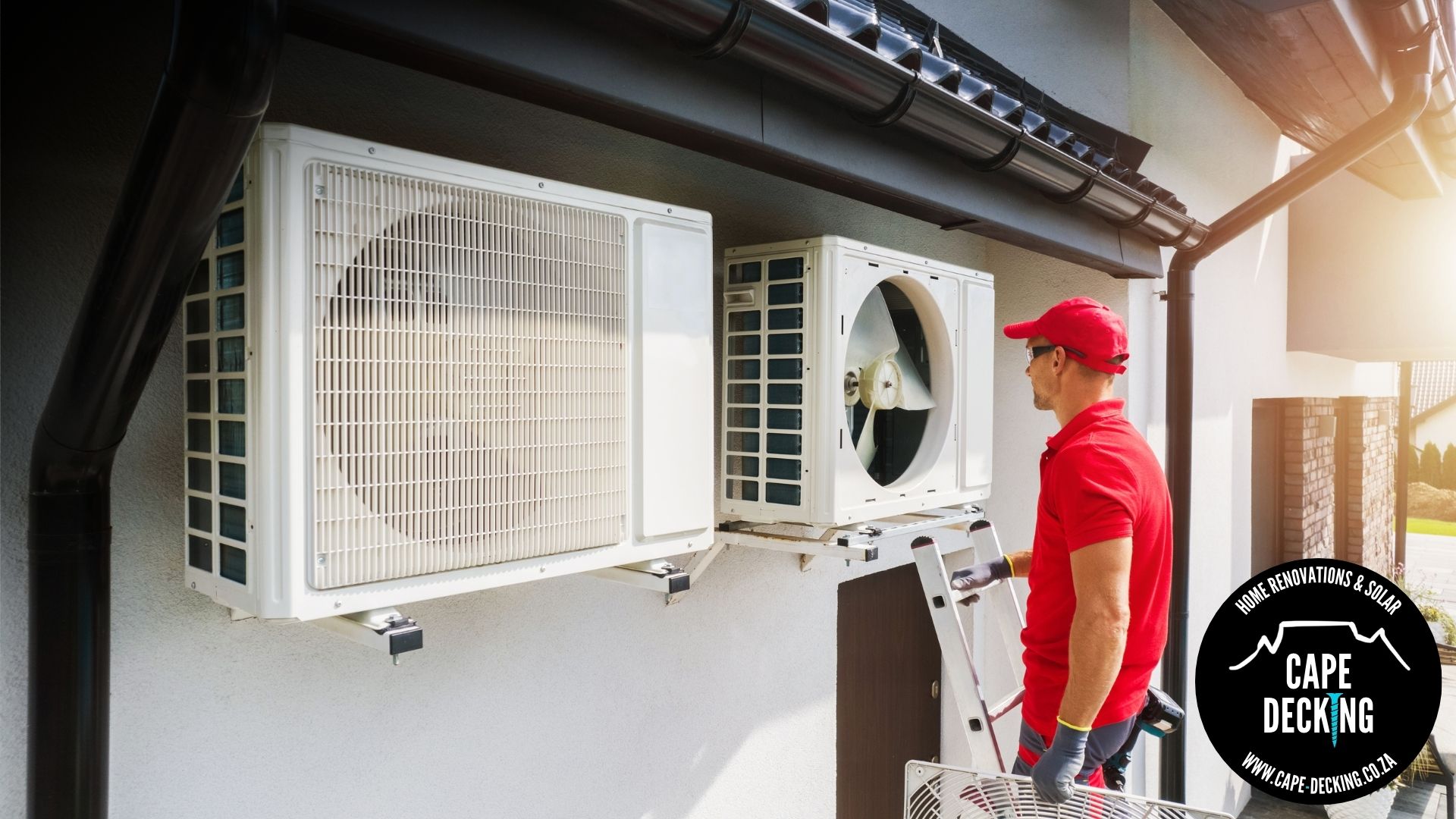
RESIDENTIAL & COMMERCIAL — CLIMATE CONTROL
ClimaPro Inverter Series — Heating & Cooling System
Full inverter-driven air-to-air heat pump providing both summer cooling and winter heating. Ideal for living rooms, offices, and open-plan spaces from 30m² to 120m².
R24,000 — R72,000
Installed, incl. VAT. Multi-zone systems quoted separately.
RESIDENTIAL — POOL HEATING
AquaPool Elite — Swimming Pool Heat Pump
Extend your swimming season to year-round use. Efficiently heats pools up to 150,000L with titanium heat exchangers for long-term salt and chemical resistance.
R32,000 — R68,000
Installed, incl. VAT. Pool size survey required.
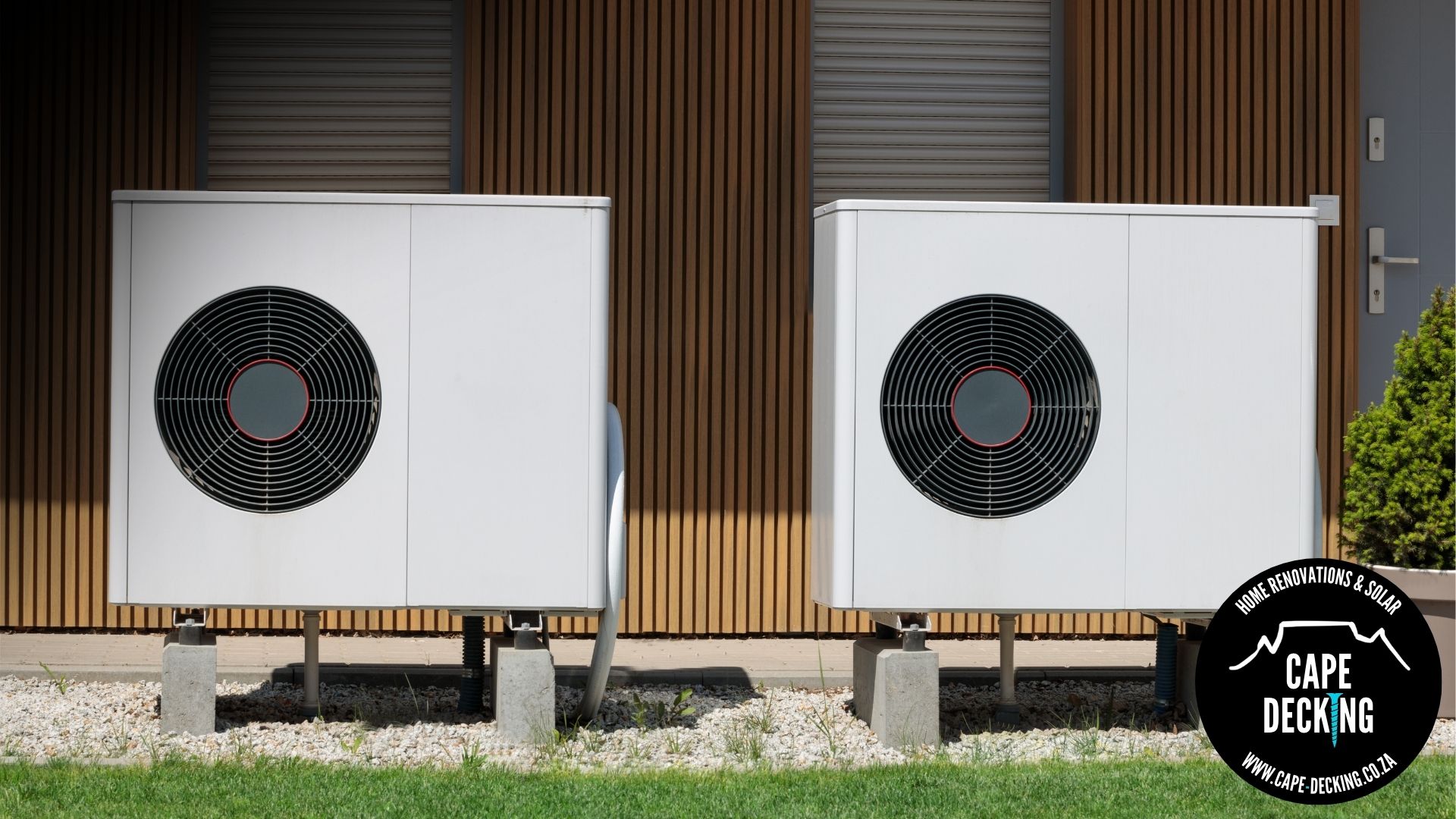
COMMERCIAL — LARGE SCALE
CommercialPro VRF System — Commercial Heat Pump
Variable refrigerant flow systems engineered for hotels, restaurants, office parks, retail centres, and industrial facilities. Multi-zone control, centralised monitoring.
R120,000 — R800,000+
Full site survey and custom quote required.
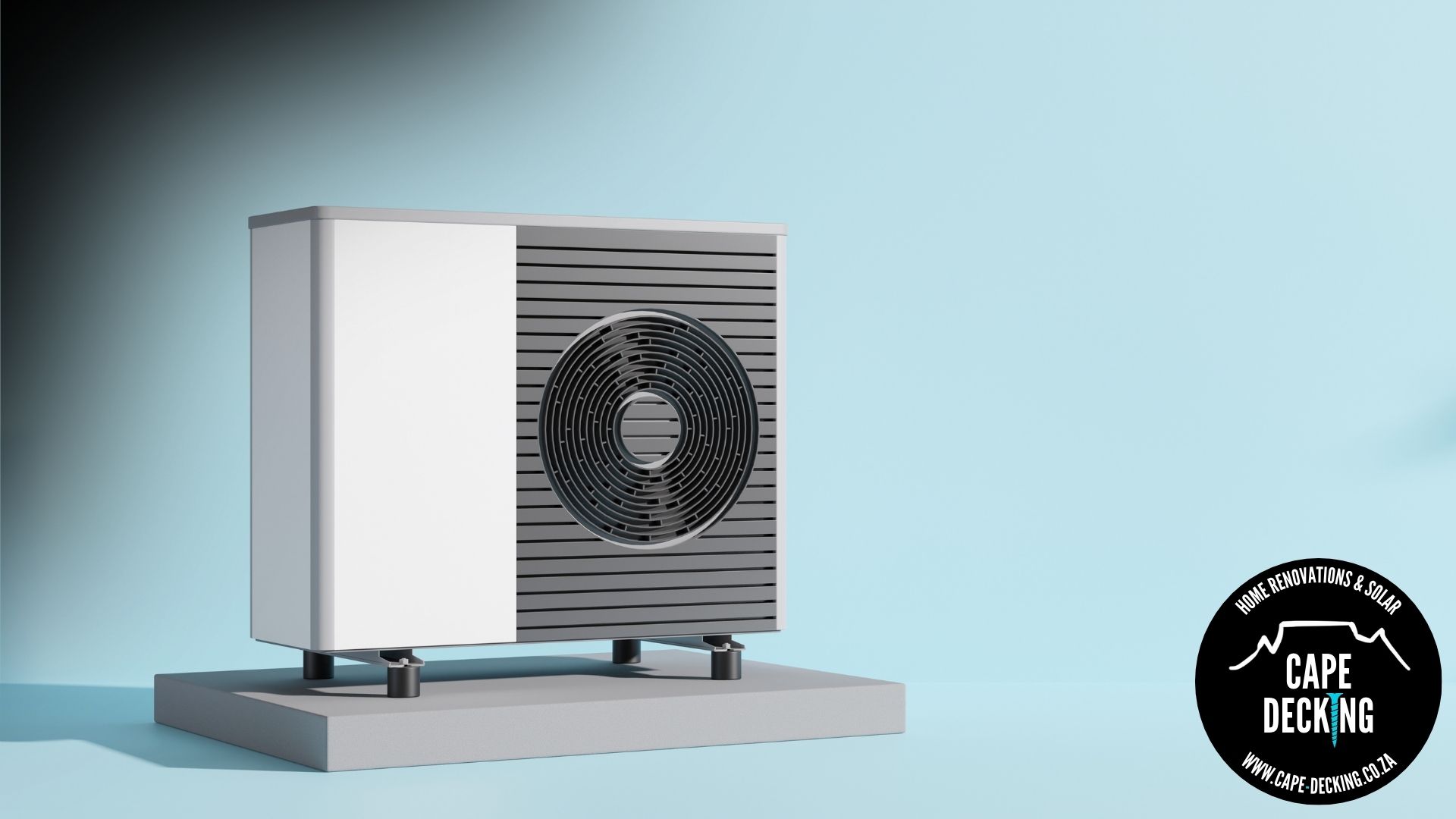
HYBRID SYSTEM — MAXIMUM SAVINGS
SolarTherm Hybrid — Solar-Powered Heat Pump System
The ultimate energy solution: solar PV-powered heat pump operating virtually off-grid. Paired with battery storage for 24/7 hot water and climate control — near-zero utility dependency.
R85,000 — R350,000
Full energy audit required. Finance options available.
RETURN ON INVESTMENT
Your Investment Works Harder Than Your Electricity Bill
Real numbers. Transparent pricing. Measurable savings. Below is a representative residential installation example.
Before Heat Pump
Estimated monthly electricity cost attributable to conventional electric geyser + resistance heating for an average 4-bedroom residence.
Annual spend: R21,600 – R31,200
After Heat Pump
Estimated monthly running cost with a premium heat pump system. COP of 4–5 means 4–5x the heat output per rand of electricity consumed.
Annual spend: R5,760 – R9,360
Return on Investment
Initial investment: R18,500 – R45,000 installed. Annual saving: R14,000 – R22,000. Full payback achieved within 3–4.5 years — then pure savings every year after.
20-year net saving: R220,000 – R400,000+
COMPLETE YOUR INSTALLATION
Enhance Your Home or Business With Our Add-On Solutions That Integrate With One-Another
Clients who combine solutions save more, maintain less, and live better. Here’s why discerning property owners bundle these technologies.

Water Filtration Systems
South Africa’s municipal water supply is increasingly inconsistent in quality. Scale, sediment, and chemical contaminants reduce the lifespan of your heat pump’s heat exchanger and cylinder significantly.
Why add it: A properly specified water filtration system protects your heat pump investment, extends its operational life, and provides pure, great-tasting water throughout your property.
- ✓ Extends heat pump lifespan by 3–5 years
- ✓ Reduces limescale and corrosion damage
- ✓ Improves water quality for drinking and bathing
- ✓ Bundled savings when installed with heat pump
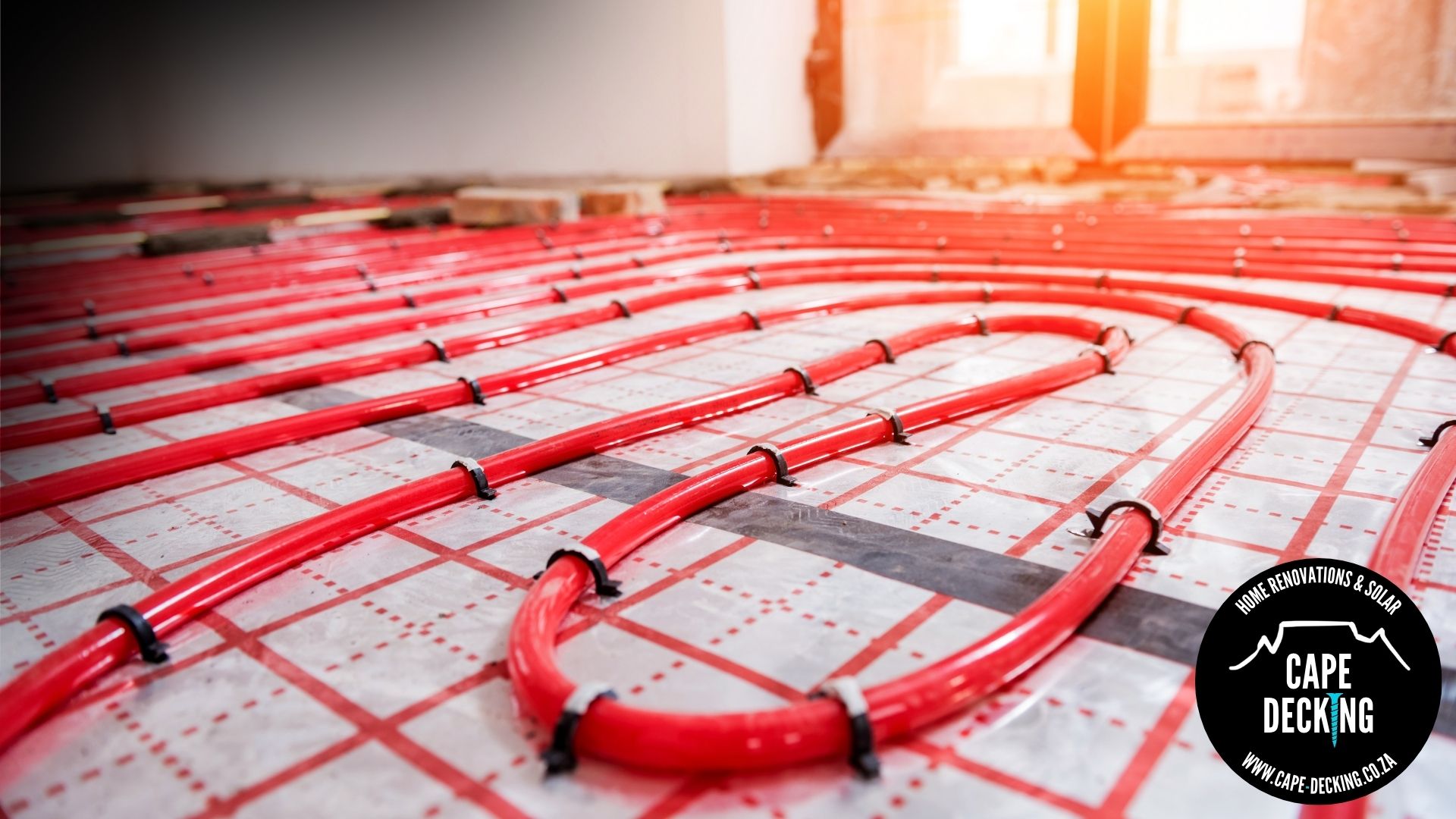
Underfloor Heating
The most luxurious form of home heating available — radiant underfloor heating distributes warmth evenly from the ground up, creating a superior comfort experience compared to forced-air systems.
Why add it: When powered by your heat pump, underfloor heating operates at low water temperatures — maximising efficiency and achieving the highest possible COP (coefficient of performance).
- ✓ Silent, invisible, allergen-free heating
- ✓ Maximises heat pump efficiency (40°C flow temp)
- ✓ Adds tangible property value
- ✓ Ideal for tiles, stone, timber, and polished concrete
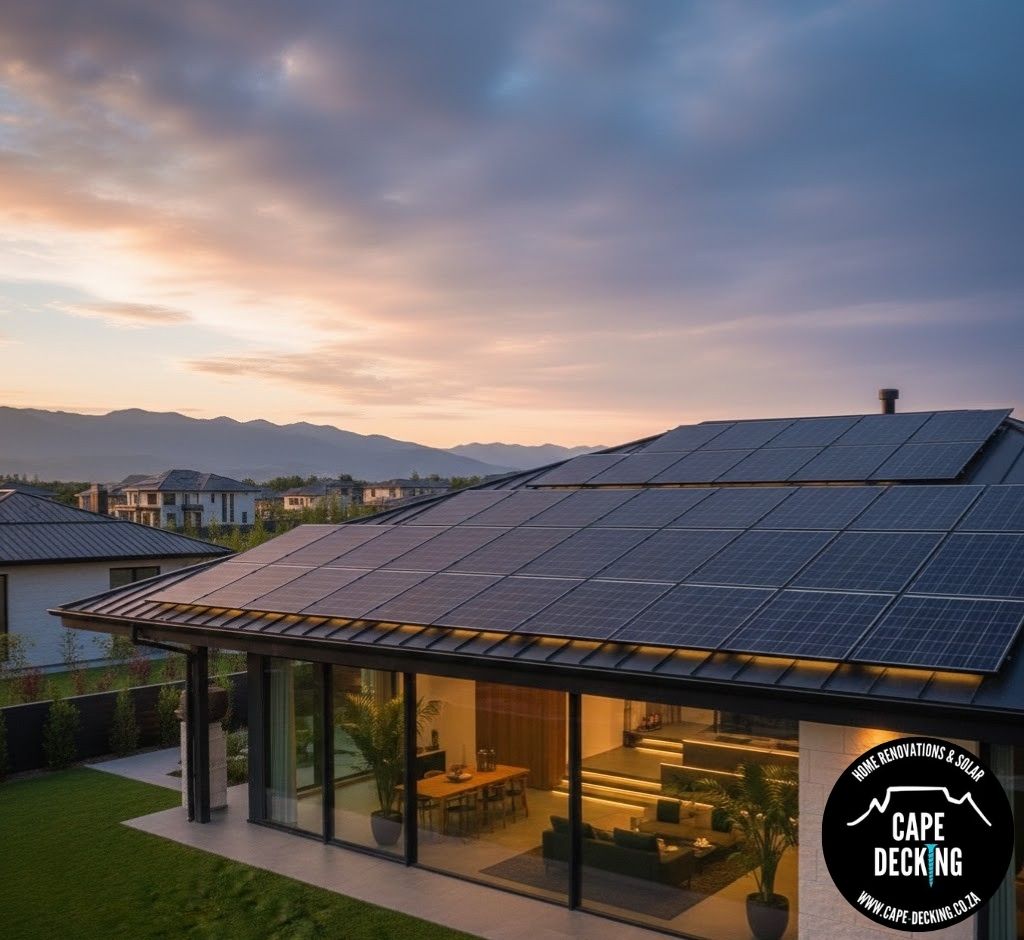
Solar Power Systems
Complete the circle of energy independence. Coupling your heat pump with a solar PV system and battery storage means you generate the power your heat pump needs — reducing your grid dependency to near zero.
Why add it: Solar-powered heat pumps deliver the fastest ROI of any energy solution. Eskom-independent operation gives you reliability, cost certainty, and long-term asset value.
- ✓ Near-zero Eskom dependency
- ✓ Battery backup during load shedding
- ✓ Fastest-possible heat pump ROI
- ✓ SSEG grid-tie compliance and documentation
AFTERCARE
Protect Your Investment With Annual Service Plans
A premium heat pump is a long-term asset. Like a high-performance vehicle, it performs best — and lasts longest — when serviced regularly by certified technicians.
Our service plans give you complete peace of mind. Your warranty remains valid. Your system runs at peak efficiency. And any issues are caught early — before they become expensive problems.


Is This Solution Right for You?
We work exclusively with clients who demand excellence — and understand that genuine quality requires appropriate investment. Our solutions are not designed for those seeking the lowest price. They are engineered for those who recognise that the lowest running cost over 20 years is the only metric that matters.
Our Clients Include:
This Is Not the Right Fit If You’re Looking For:
“Our reputation is built on installations that perform flawlessly for decades — not systems that need replacing in five years. We are selective about what we supply and how we install it. This ensures every client gets exactly what they paid for: genuine, long-term results.”
CLIENT REVIEWS
What Our Clients Say
Verified reviews from homeowners and business clients across South Africa.
“The team was professional from the initial consultation through to final commissioning. Our electricity bill dropped by over R1,400 in the first month. The installation is immaculate — every cable and pipe run is perfectly finished.”
“We installed four heat pump systems across our boutique hotel. The service knowledge, quality of equipment, and post-installation support has been exceptional. ROI achieved in under 3 years.”
“Not the cheapest quote we received — but without question the most comprehensive. Three years later, not a single call-out required. The system has been flawless.”
FREQUENTLY ASKED QUESTIONS
Everything You Need to Know
Installation time for underfloor heating depends on the system type and the scale of the project. A single-room electric mat or cable installation can typically be completed within one working day. Larger electric installations across multiple rooms may take two to three days. Hydronic systems require coordination with screeding, plumbing, and flooring contractors, a full installation across a larger home can take several days to a week.
For new builds, the ideal time to install underfloor heating is during the screed or subfloor stage, before tiling or floor coverings are laid. Retrofitting is possible but more disruptive and costly. Cape Decking works closely with homeowners, contractors, and architects across Cape Town to align installation with your project schedule.
Plan your underfloor heating installation with Cape Decking or read the full guide here.
Most modern floor coverings work well with underfloor heating when paired with the right system. Ceramic and porcelain tiles are the most efficient, they conduct and retain heat effectively and are a natural fit for Cape Town homes. Natural stone performs similarly well. Engineered wood and luxury vinyl planks are also compatible, provided the thermal resistance (tog) rating falls within the recommended range.
Thick carpet and solid hardwood can reduce heating performance and may not be suitable depending on the system specified. Cape Decking assesses floor compatibility as part of every quote, so there are no surprises once installation begins.
Get a floor compatibility assessment from Cape Decking or read the full underfloor heating guide for Cape Town here.
Cape Town’s winters are consistently cool and damp, and underfloor heating in Cape Town has become the go-to solution for homeowners who want reliable warmth without wall-mounted heaters or gas systems. It delivers even, radiant heat across the full floor surface, rising naturally through the room without the dry air or noise of forced-air alternatives.
From an investment perspective, underfloor heating adds measurable value to a property, increasingly expected in high-spec homes across the Atlantic Seaboard, Southern Suburbs, and Winelands. For developers and architects, it’s fast becoming standard on new build specifications. For homeowners renovating, it’s a practical upgrade that improves both comfort and resale appeal.
Speak to Cape Decking about underfloor heating for your Cape Town property or learn more about your options through our blog post here.
Underfloor heating price in South Africa depends on the system type, area size, and installation complexity. Electric systems typically range from R200 to R600 per square metre for supply and installation. Hydronic systems, which involve more pipework and components, generally start at R800 per square metre and can exceed R1,500 per square metre for larger or more complex projects.
While hydronic systems carry a higher upfront underfloor heating cost, their running costs are lower over time, making them a strong long-term investment for bigger homes and developments. Always request a detailed quote that covers materials, labour, thermostat controls, and any subfloor preparation work.
Request your free underfloor heating price from Cape Decking or for a full breakdown of system types and installation advice read our blog here.
When it comes to underfloor heating, South African homeowners and developers have two main systems to choose from. Electric systems use heating cables or mats that sit beneath your floor surface, they’re cost-effective to install and ideal for single rooms or smaller areas like bathrooms and kitchens. Hydronic systems use a network of pipes carrying heated water across the floor and are better suited to larger spaces where long-term running cost efficiency matters most.
Both systems can be paired with smart thermostats and timers to manage energy use effectively. The right choice depends on your floor coverage area, property type, and budget. Cape Decking offers honest, no-pressure consultation to help you choose with confidence.
To get expert advice on underfloor heating contact Cape Decking or you can read our complete guide here.
The number of solar panels a home needs is directly tied to monthly electricity consumption. Most South African households using between 600 and 800 kWh per month will require:
- 8 to 14 solar panels based on individual panel wattage
- A 5kW to 8kW inverter
- Sufficient battery capacity to cover overnight and load shedding demand
One advantage of being in Cape Town or the Western Cape is the region’s exceptional sunshine, averaging 5 to 6.5 peak sun hours daily, which allows panels to generate more energy per unit than in lower-sunshine areas, sometimes reducing the total number of panels required. To find out more read here on how to Find the right system size at Cape Decking or Read our full solar sizing breakdown
The final solar panel price you’re quoted comes down to a combination of technical and logistical factors. The most common price drivers include:
- System size in kilowatts – directly proportional to cost
- Battery type and capacity – lithium batteries add value but increase the upfront price meaningfully
- Inverter specification – hybrid inverters cost more but are essential for load shedding protection
- Roof access and complexity – steeper or more complex roofs take longer to install on
- Installer and region – Cape Town and broader Western Cape pricing varies between suppliers
The golden rule when comparing solar panel quotes is to ensure you’re comparing the same specifications across every quote, brand, wattage, warranty, and battery capacity included. For more information Explore Cape Decking’s solar options or Read more in our Solar Panels blog
When you weigh up the solar panel price against long-term savings, the investment case in South Africa is compelling. Here is why:
- Eskom tariff increases have been consistent and show no sign of slowing
- A properly sized solar panel system can cut your electricity bill by 70–100%
- The average payback period is 4 to 7 years, after which energy production is effectively free
- Solar panels carry a standard 25-year performance warranty
- Cape Town and the Western Cape rank among South Africa’s highest sunshine regions, maximising panel output and shortening your ROI timeline
For homeowners who have been sitting on the fence, 2026 is one of the strongest years yet to act, competitive installer pricing, improved battery technology, and ongoing grid uncertainty make the decision easier than ever.
For more information Visit Cape Decking’s solar page or Read our full Is Solar Worth It blog
Solar panels on their own will not keep your home powered during load shedding. A grid-tied system is legally required to shut down when the grid goes offline, regardless of how much sunlight is available. The solution is a hybrid solar system with battery storage, which:
- Charges batteries throughout the day using solar energy
- Draws from those batteries the moment the grid cuts out
- Switches back to grid power automatically once supply is restored
Across South Africa, and particularly in Cape Town and the Western Cape where load shedding disruption is well documented, hybrid systems have become the standard recommendation for any new solar installation in 2026.
For more information See Cape Decking’s hybrid solar solutions or Read our load shedding solar guide
Solar panel prices in South Africa sit anywhere between R60,000 and R250,000+ once installed, depending on how large a system your home requires and whether battery storage is included. To give you a clearer picture:
- 3–5kW system: R60,000 – R100,000
- 5–8kW system: R100,000 – R160,000
- 10kW+ system: R160,000 – R250,000+
Prices across Cape Town and the Western Cape are broadly consistent with the national average, though installer rates and local supplier stock levels can shift your final quote. Request an itemised breakdown that separates panels, inverter, batteries, and labour before making any decision. For more information View solar panel pricing at Cape Decking or Read our full Solar Panels Price guide here
A heat pump is an energy-efficient device that transfers heat from one place to another rather than generating heat directly. In South Africa, heat pumps are most commonly used to heat water or swimming pools. They extract warmth from the surrounding air and use it to heat water, using up to 70% less electricity than a conventional electric geyser or pool heater.
Think of it as your fridge working in reverse, instead of removing heat from inside, it pulls heat from outside and puts it to work.
Heat pump prices in South Africa vary based on size, brand, and application. As a general guide:
Domestic water heat pumps ≈ R8,000 to R18,000 installed
Pool heat pumps ≈ R15,000 to R35,000 installed
Commercial heat pumps ≈ R30,000 and above depending on scale
The upfront cost is offset by significant savings on your monthly electricity bill. Most homeowners see a return on investment within 2 to 4 years. Want an accurate quote? Get a free heat pump quote from Cape Decking today.
This is one of the most common questions homeowners ask, and the honest answer is: it depends on your situation.
Heat pumps work day and night, in cloudy conditions, and require no roof space or direct sunlight. Solar geysers rely on sunlight and are less effective in overcast conditions, though they can be cheaper upfront.
For consistent, reliable hot water with minimal electricity use, a heat pump is often the smarter long-term choice.
A standard heat pump requires electricity to operate and will not function during load shedding unless paired with a battery backup or solar PV system. However, because heat pumps are so energy efficient, they place far less demand on your backup power system than a conventional geyser would.
Pairing a heat pump with solar panels is an increasingly popular solution across South Africa.
A pool heat pump South Africa homeowners love is exactly what it sounds like, a system that heats your swimming pool efficiently throughout the year. South Africa’s climate makes pool heat pumps extremely effective, as even mild ambient air temperatures allow the system to work well.
- Extends your swimming season by months
- Uses up to 80% less electricity than a traditional pool heater
- Low maintenance with a long lifespan of 10 to 15 years
If you have a pool, a heat pump is one of the best upgrades you can make.
Yes, hydronic underfloor heating is seen as a premium feature that improves comfort, energy efficiency, and aesthetics by eliminating bulky radiators. Many buyers view it as a luxury upgrade, which can increase the desirability and value of a property.
Hydronic underfloor heating systems are highly durable, with pipework lasting 40–50 years or more if properly installed. The manifolds, pumps, and boilers/heat pumps may need replacement every 15–20 years, but the system overall is a long-term investment in comfort and efficiency.
Yes, hydronic underfloor heating can be retrofitted into existing homes, though it may involve lifting flooring and increasing floor height slightly. It is most cost-effective when installed during new builds or major renovations. In-screed and over-floor panel systems are available for retrofits.
Yes, hydronic underfloor heating is generally more cost-effective to run compared to electric systems, especially for larger areas. It uses heated water circulated through pipes and can be powered by energy-efficient heat pumps or solar systems, reducing long-term energy expenses.
Hydronic underfloor heating is a heating system that uses warm water circulated through pipes installed beneath the floor surface. The heated water gently warms the floor, which then radiates heat evenly throughout the room. This system is energy-efficient, provides consistent comfort, and can be powered by a variety of heat sources such as gas boilers, heat pumps, or solar systems. It is especially popular in South Africa for homeowners seeking a modern, cost-effective, and long-lasting home heating solution.
On average, electric underfloor heating costs between R400 and R1,200 per month depending on the size of the space and how frequently it is used.
Contact us to schedule in an appointment, we can also install a solar system to make it more cost effective to run underfloor heating.
The cost per m² for electric underfloor heating is between R1,000 and R2,500, while water underfloor heating costs between R2,000 and R3,800 per m². It is subject to your current flooring type, square meterage per room.
Contact us to schedule in an appointment.
Electric underfloor heating is cheaper to install (R1,000 – R2,500 per m²) and best for small rooms, but running costs are higher (R400 – R1,200/month).
Water underfloor heating systems cost more upfront (R2,000 – R3,800 per m²) but are cheaper to run (R300 – R800/month), making them ideal for larger homes.
Contact us to schedule in an appointment to find out what the options are between electric vs water underfloor heating systems. We can also install a solar system to make it more cost effective to run underfloor heating.
Electric underfloor heating does increase electricity usage, but thanks to its efficiency, it is often more affordable than using heaters or air conditioning. Water-based systems are even more cost-effective long-term.
Contact us to schedule in an appointment, we can also install a solar system to make it more cost effective to run underfloor heating.
The installation time for underfloor heating depends on the room size and system type. A small room may take 1–2 days, while a whole house installation can take 1–2 weeks.
Contact us to schedule in an appointment and learn how to make the underfloor heating installation more cost effective with the installation of a solar system.
Yes, underfloor heating works very well under tiles. Tiles are excellent heat conductors, making them one of the most efficient flooring types for electric and water underfloor heating systems.
Contact us to find out how to make your underfloor heating installation more cost effective with a solar system.
Yes, underfloor heating can be used under laminate or wood flooring, but the system must be installed correctly with proper insulation to prevent overheating and to ensure energy efficiency.
Contact us to find out how to make your under wooden flooring underfloor heating installation more cost effective with a solar system.
Yes, underfloor heating is considered a luxury feature in South Africa. It not only improves comfort and energy efficiency but also increases the resale value of your property.
Contact us to find out how to make your underfloor heating installation more cost effective with a solar system.
When installed professionally, underfloor heating systems can last for more than 25 years. Electric heating mats and water pipes are highly durable and require minimal maintenance.
Contact us to find out how to make your underfloor heating installation more cost effective with a solar system.
Electric underfloor heating is cheaper to install and is ideal for small rooms such as bathrooms or kitchens. Water underfloor heating is more expensive upfront but is better for larger areas and whole-house heating due to lower running costs.
No, underfloor heating is generally cost-effective to run compared to heaters and air conditioners. Electric underfloor heating typically costs between R400 – R1,200 per month, while water systems are even cheaper in the long term due to better efficiency.
The cost of underfloor heating in South Africa ranges from R1,000 – R2,500 per m² for electric systems and R2,000 – R3,800 per m² for water systems. Installation costs for an average room can range from R25,000 to R70,000+ depending on the system type and floor size.
Net metering in South Africa is a billing system that allows homeowners and businesses with solar PV installations to sell excess electricity back to the grid. Here’s how it works:
- Electricity Generation: Solar panels generate electricity during the day.
- Usage and Excess: You use some of this electricity to power your home or business. Any excess electricity is fed back into the grid.
- Credits: The excess electricity is tracked by a bi-directional meter, and you receive credits for the electricity you contribute to the grid.
- Offsetting Bills: These credits can be used to offset your electricity bill when you use more power than you generate, such as at night.
Net metering provides several benefits, including cost savings on electricity bills, a reduced carbon footprint, and a return on investment for solar energy users
For more detailed information, you can visit this post on net metering.
Interested in getting a quote for a solar solution? Click here to get a quote and start your journey towards energy independence today!
Answer: Getting started is easy! Simply contact us to arrange a free consultation. We’ll assess your energy needs, design the perfect system for you, and provide an accurate quote. Contact us today to take the first step toward a sustainable energy future.
Answer: Solar panels require minimal maintenance. Regular cleaning and an annual inspection are usually sufficient to keep your system operating efficiently. We offer maintenance packages to ensure your system runs smoothly. Reach out to us for more details.
Answer: If your system produces excess energy, you can sell it back to the grid through net metering, reducing your electricity bills. In an off-grid setup, extra energy is stored in batteries for later use. Contact us to discuss how we can help you maximize your solar power.
Answer: Solar installation typically takes between 3 to 7 days, depending on the system size and complexity. We ensure efficient and timely installations to minimize disruption to your home or business. Get in touch today to schedule your installation.
Answer: Yes, there are tax incentives available for businesses and homeowners who install solar systems in South Africa. These include rebates for certain solar installations. We can help guide you through the process. Contact us for more information.
Answer: The system size you need depends on your energy consumption. Our team will assess your usage and recommend the optimal system for your home or business. Book a free consultation to get a personalized recommendation.
Answer: Solar panels are designed to last for 25 to 30 years with minimal maintenance. Their efficiency will gradually decrease over time, but they will continue to generate power for decades. Ready to invest in a long-lasting energy solution? Contact us to get started.
Answer: No, you don’t have to be connected to the grid. You can opt for an off-grid solar system, especially in remote areas. We provide both grid-tied and off-grid solar solutions. Reach out to us to discuss which option is best for you.
Answer: Yes! South Africa enjoys plenty of sunshine, making solar energy a reliable and sustainable energy source. With the right system and components, solar can provide power year-round, even during the cloudy season. Let us help you ensure a steady power supply—contact us for a consultation.
Answer: The cost of solar panel installations varies depending on system size and requirements. For a 3kW system, prices typically range from R45,000 to R75,000, a 5kW system ranges from R70,000 to R120,000, and a 10kW system can range from R140,000 to R250,000. These prices depend on factors like roof type, location, and system complexity. Contact us for a free, tailored quote.
GET IN TOUCH
Request Your Free Consultation & Site Survey
Our process begins with a no-obligation consultation and site survey. We assess your property, understand your requirements, and present a transparent, fixed-price proposal — with a full ROI projection.
Expect a response within 2 business hours.
KNOWLEDGE HUB