Composite Decking Cape Town
Composite decking supplied and installed across Cape Town, from the Atlantic Seaboard to the Helderberg.
Work out your composite decking price per m2 with our decking calculator. Prefer timber? We also install balau, garapa, pine and massaranduba.
Composite decking costs more than timber upfront and less over ten years, because it never needs sealing. Installed composite decking prices in Cape Town run between R2,100 and R3,200 per square metre depending on the board you choose and what sits underneath it.
It is not the right answer for every deck. Further down this page we have been honest about where composite loses to hardwood, because the wrong material on the wrong site is an expensive mistake to live with.
Every job is measured on site before a price is given. Use the decking calculator for an immediate composite decking price per m2 estimate, then book a site visit for a firm figure.

Composite Decking Prices in Cape Town
Prices below are installed per square metre and include substructure, boards, fixings and hidden clips. They assume a reasonably level existing surface and normal site access.
| Board Type | Installed Price per m² | Expected Life | Best Suited To |
|---|---|---|---|
| Uncapped Composite | From R2,400 | 15–20 years | Shaded decks and tighter budgets |
| Capped Composite | From R2,800 | 25+ years | Full sun, pool surrounds and coastal sites |
| Co-extruded Capped, Wood Grain | From R3,000 | 25+ years | Where appearance matters most |
What moves a composite decking quote up or down
Substructure. Fixing to a sound existing slab is the cheapest route. Raised decks, new footings or framing over soil add materially to the cost.
Board type. Capped versus uncapped is the single biggest price variable, and the one that matters most in Cape Town sun.
Level changes and edge detail. Steps, split levels, mitred returns and picture framing all add labour.
Access. Composite boards are heavier than timber. If every board has to be carried through the house, that shows up in the quote.
Capped vs Uncapped: Why It Matters in Cape Town
This is the decision that determines whether your deck still looks good in five years.
Uncapped Composite
A single homogenous board of wood flour and polymer throughout. Cheaper, and the colour runs all the way through, so deep scratches are less visible.
It has no protective barrier, so it absorbs stains, holds mould in damp shaded spots, and fades noticeably under UV.
Defensible on a shaded, south-facing deck. Not on a north or west-facing pool surround.
Capped Composite
A hard polymer shell bonded to the outside of the board. That shell is what resists UV fading, red wine, sunblock, braai fat and algae.
It is the only version we would specify for a deck in full Cape Town sun or anywhere near the sea.
The gap between the two is roughly R300 to R450 per square metre. On a 40 square metre deck that is R12,000 to R18,000, against the cost of a deck that has faded unevenly by year six.


View completed projects and authentic installation photos – in our gallery here.
Composite Decking vs Wooden Decking
We supply both, so we have no reason to push you one way.
Where Composite Wins
Where Composite Loses
The short version. If your deck is in full afternoon sun and people will walk on it barefoot, wooden decking stays more comfortable. If you want a deck you never maintain that looks identical in a decade, composite wins. Both are correct answers to different questions.
Composite Decking Advantages
Composite Decking Board Options
Infinity I-Series Decking Board
The I-Series board uses the same low maintenance, highly durable Infinity material with the next generation of extrusion technology. Available in Spanish Saffron, Alpine Mist, Caribbean Coral and Tiger Cove.


| Dimensions | Mass per metre | Mass per plank | Standard length |
|---|---|---|---|
| 25.5 x 135.0 mm | 2.88 kg | 16.70 kg | 5 800 mm |
Infinity Trim Fascia Board
Screen off private areas or clad aircon units, cables and pipework to match your composite decking, leaving a seamlessly neat and elegant outdoor space.


| Dimensions | Mass per metre | Mass per plank | Standard length |
|---|---|---|---|
| 12 x 150 mm | 2.48 kg | 7.19 kg | 2 900 mm |
Composite Decking Maintenance
There is not much to it, which is the point.
Wash down with warm soapy water and a soft brush twice a year, more often under trees.
Sweep leaves and debris out of the gaps so water keeps draining.
Clean spills reasonably promptly. Capped boards give you time. Uncapped boards do not.
Do not use a pressure washer at close range or high pressure. It can damage the cap and will void most board warranties.
No sealing, no oiling, no sanding, ever. Over ten years a composite deck costs close to nothing to maintain. A hardwood deck the same size will have taken ten sealing cycles.
How a Composite Deck Is Installed
Site visit and measure. We measure, check the existing surface and discuss aspect and sun exposure, which drives the board and colour recommendation. No charge.
Specification and quote. A written quote stating board type, colour, substructure, fixing system and finish, so you can compare it line by line against anything else you have.
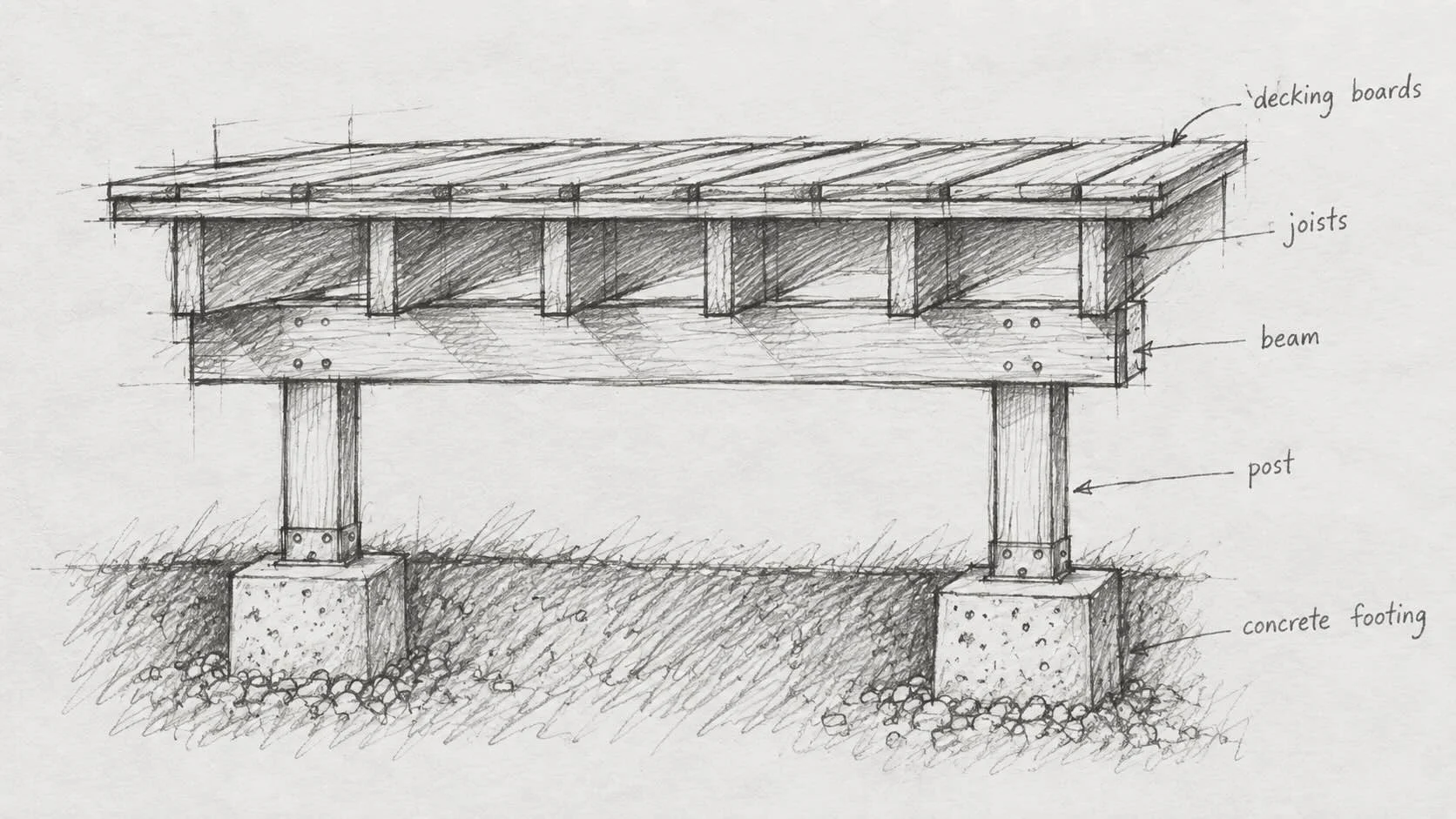
Substructure. Framing is levelled and ventilated. Composite needs correct joist spacing and ventilation underneath or it will sag between supports.
Boards and clips. Composite is fixed with hidden clips rather than face screws, which is part of why it looks the way it does.
Clean down and handover. Walked through with you.
Most composite decks under 50 square metres take three to five working days on site once boards are delivered. Board lead times vary by colour, so allow for that.
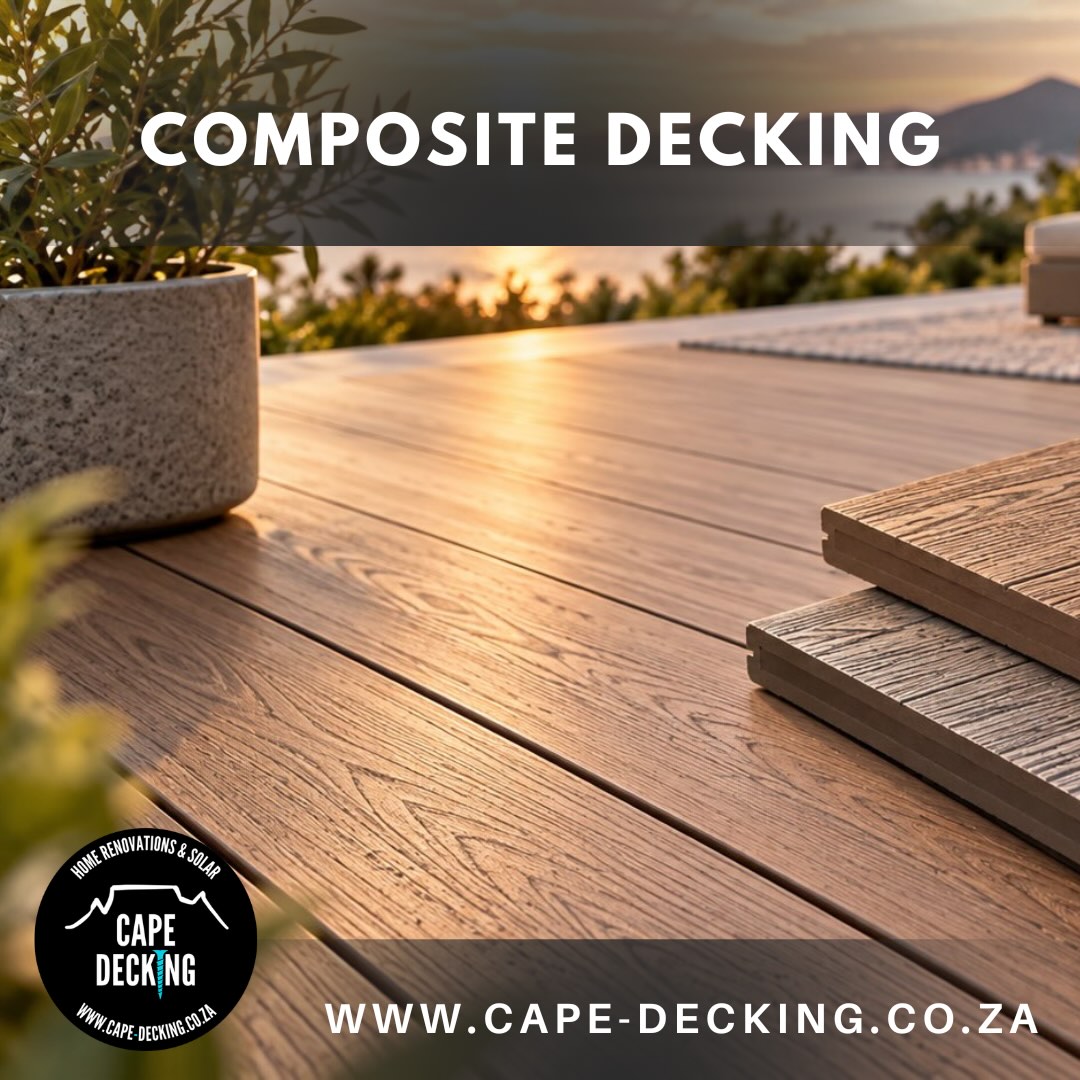
Composite Decking Board Sample Gallery


Composite Decking Questions We Are Asked Most
Does composite decking get hot in the Cape Town sun?
Yes, hotter than hardwood. Lighter colours are noticeably cooler than charcoal and dark grey. If the deck is in full afternoon sun and will be used barefoot we will say so at the site visit, and may recommend a lighter board or hardwood instead.
Does composite decking fade?
Capped composite fades very little. Uncapped composite fades noticeably, and unevenly where furniture or planters sit.
Can composite decking be laid over an existing concrete pool surround?
Yes, and it is the most cost effective approach. The substructure fixes to the slab and the old surface disappears underneath.
Is composite decking slippery when wet?
Grooved and brushed board profiles have good grip. Smooth boards less so. Around a pool we specify a textured profile.
Can composite be cut and shaped like timber?
Yes, with standard tools. Mitred returns and picture framing work well.
How long do composite boards last?
Capped boards typically carry warranties of 25 years or more against fading and staining. Uncapped is usually 15 to 20 years.
Is composite more environmentally friendly than hardwood?
It is made largely from recycled wood and plastic and needs no chemical sealers over its life. It is also not biodegradable at end of life. Both arguments are real.
A treated pine deck lasts 15 to 20 years with regular maintenance (resealing every 2 to 3 years). Hardwood decks – Balau, Garapa, and Massaranduba – last 25 to 30 years with periodic oiling. Cape Town’s coastal climate demands quality timber and proper treatment to maximise lifespan. The substructure quality and installation workmanship are equally important. A well-built hardwood deck can outlast the home it’s attached to.
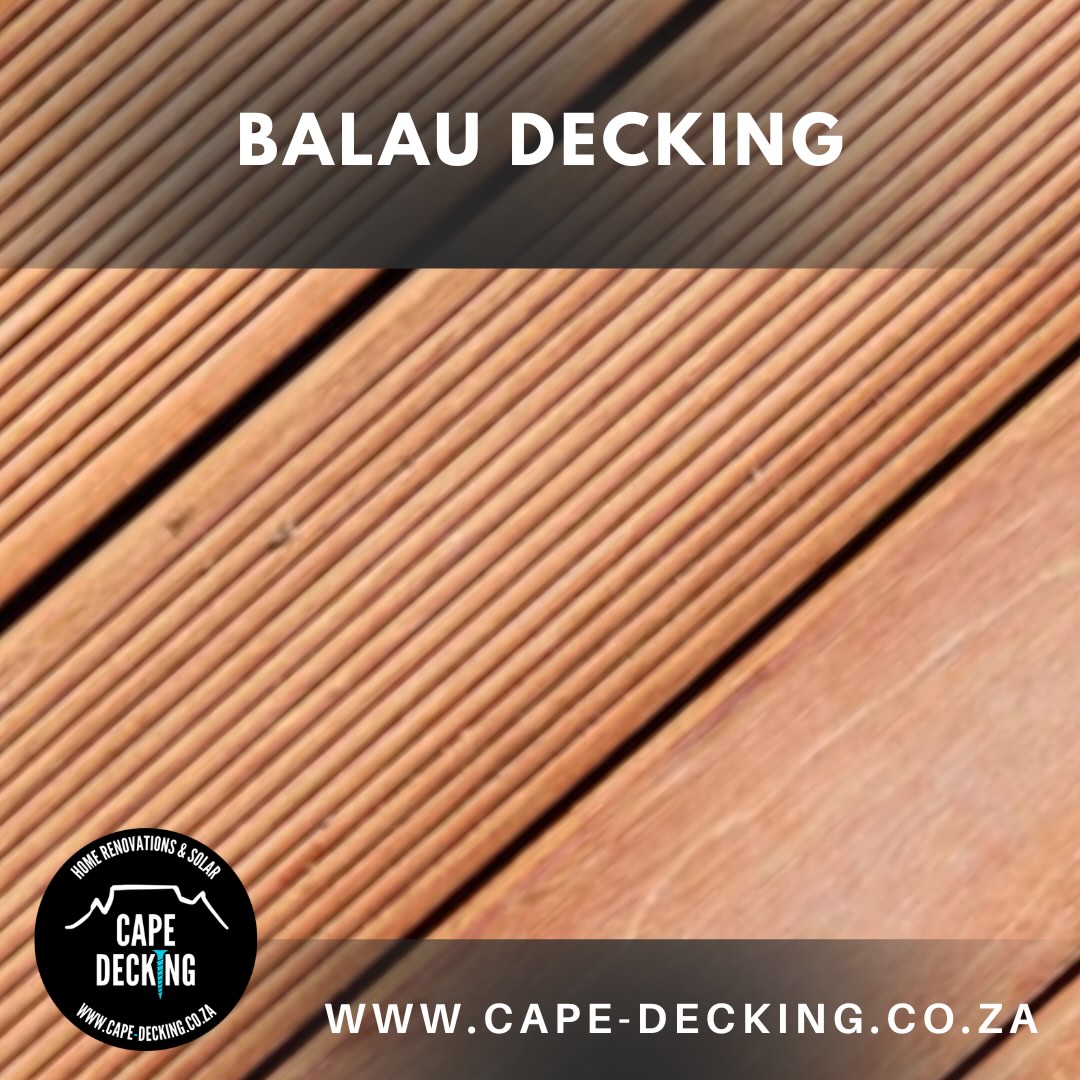
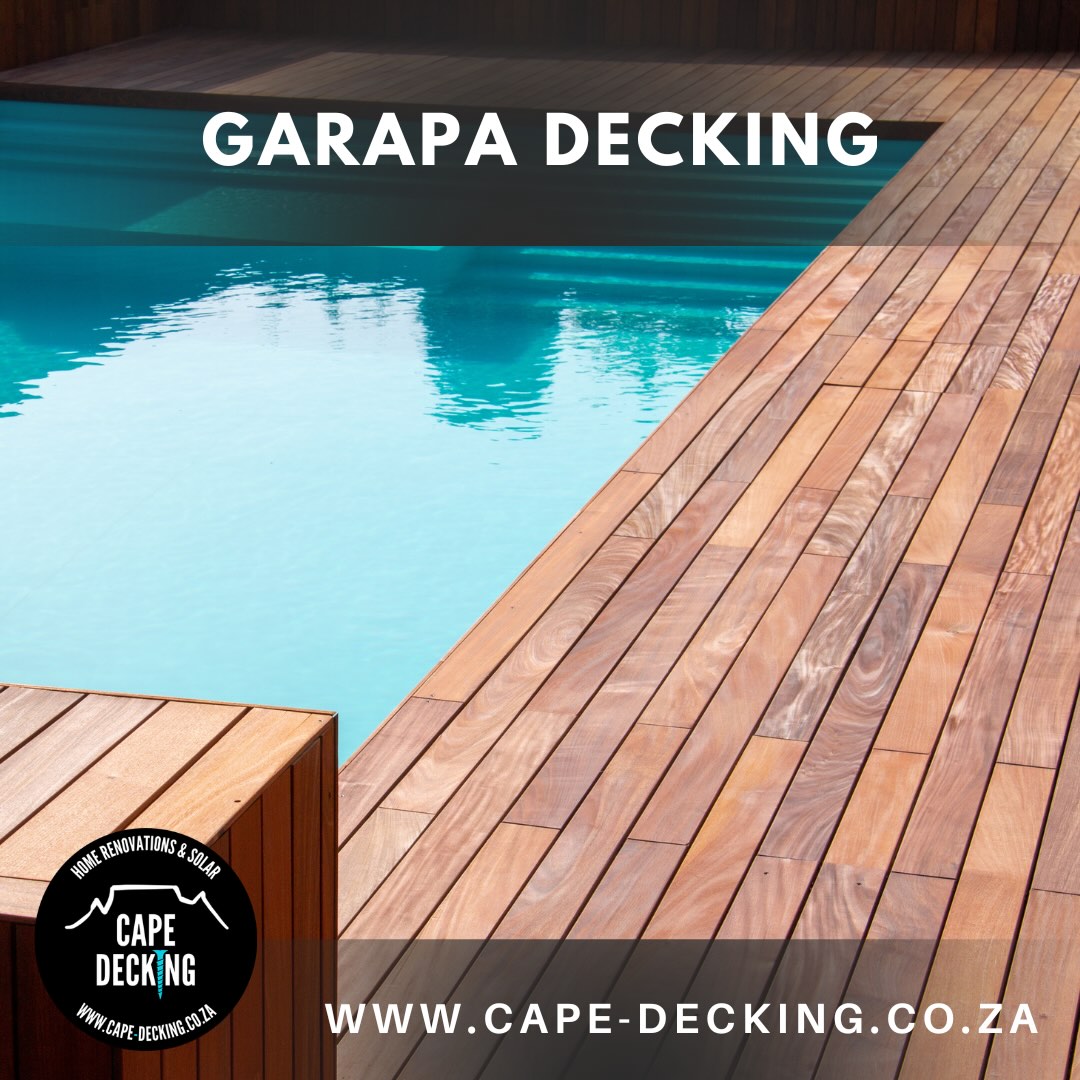
The best wood depends on your budget and priorities. For affordability, treated pine offers excellent value at R1,700 to R2,200 per m² installed. For durability and low maintenance, Balau and Garapa are the top choices in Cape Town – both resist moisture, insects, and weathering exceptionally well. Garapa offers a golden tone while Balau provides a richer reddish-brown colour. Read more about decking wood prices in South Africa and explore our wooden decking options.
Not necessarily. Entry-level composite decking starts around R1,800 per m² – similar to treated pine. Premium composite ranges up to R4,500 per m². The advantage of composite is near-zero maintenance, which can make it cheaper over 15 to 20 years. However, timber offers natural warmth, can be refinished, and often costs less upfront. Compare both options with our composite decking range or get a quote for both materials.
Timber decking prices in Cape Town range from R1,700 to now R4,000 per m² fully installed in 2026.
Treated pine sits at the lower end (R1,700 – R2,200 per m²), while premium hardwoods like Balau and Garapa range from R2,800 to R4,000 per m². These prices include materials, substructure, and labour. Extras like balustrades, stairs, and sealing are additional.
Prices fluctuate subject to fuel prices, supplier pricing and changes to local VAT & Tax laws but that is the estimate for 2026!
Contact us for a free quote to get an accurate price for your property.
Read the full guide to council approval for decks in Cape Town here.
You may also be interested in: Wooden Decking, Pool Decking, Wooden Pergolas, Wooden Fencing, Palisade Fencing