Wooden Wall Cladding Cape Town
Cape Decking supplies and installs wooden wall cladding across Cape Town and the surrounding suburbs.
Popular timber cladding options are balau, garapa, massaranduba and treated pine.
Timber cladding that changes a wall completely
A flat plastered facade, a boundary wall that has seen better days, or a bare interior feature wall all read differently once timber goes on them. Wall cladding is one of the few finishes that adds warmth and texture without structural work, and on a house where the deck is already timber it ties the whole exterior together.
Cape Decking supplies and installs wall cladding across Cape Town and the surrounding suburbs. We work in the same hardwoods we use for wooden decking, which means Balau, Garapa and Massaranduba, along with treated pine where budget is the deciding factor.
Every job starts with a site measure, because cladding pricing depends on wall area, access, and what the wall is made of. You can see a recent job on our Balau wall cladding install.
Exterior wall cladding
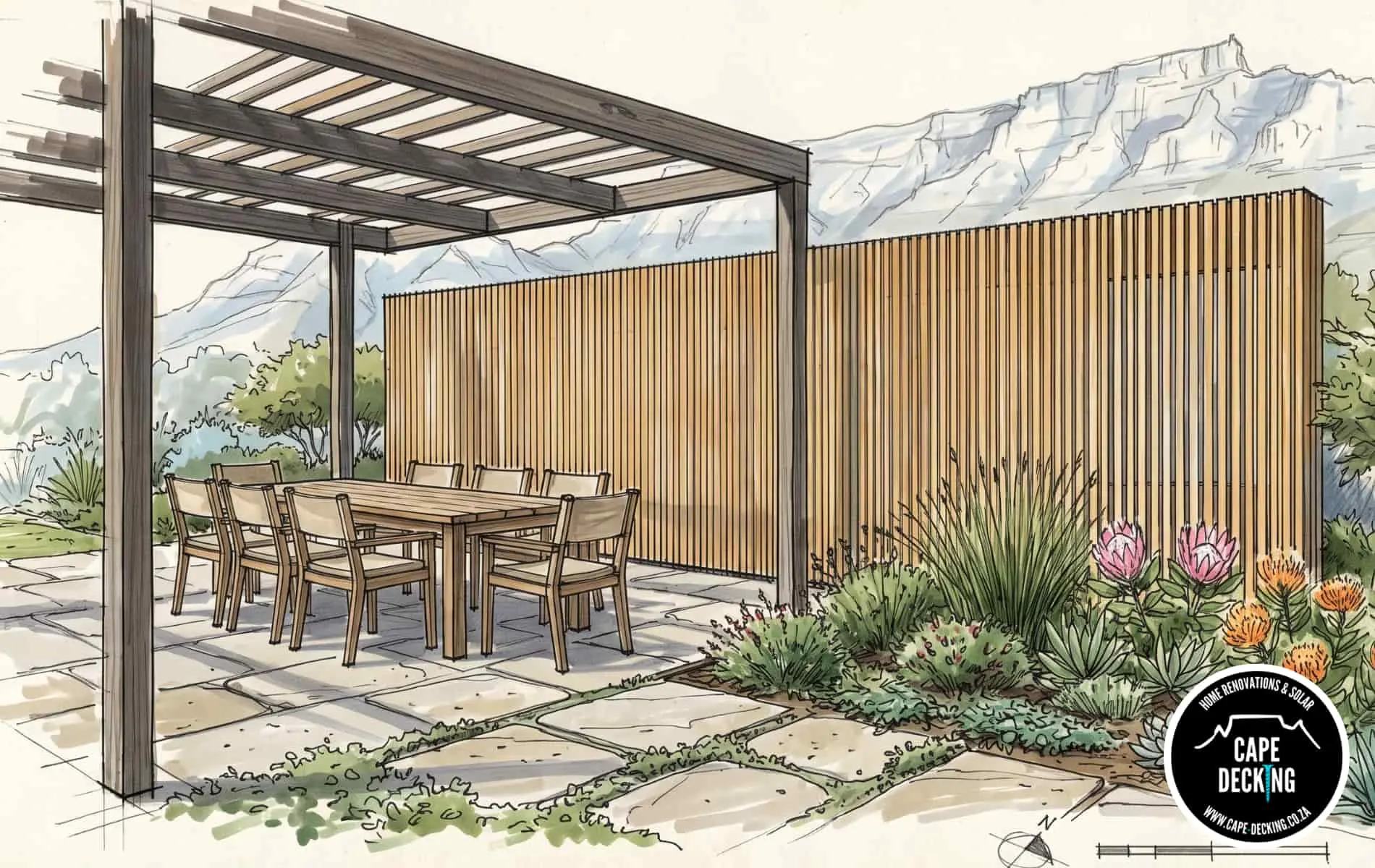
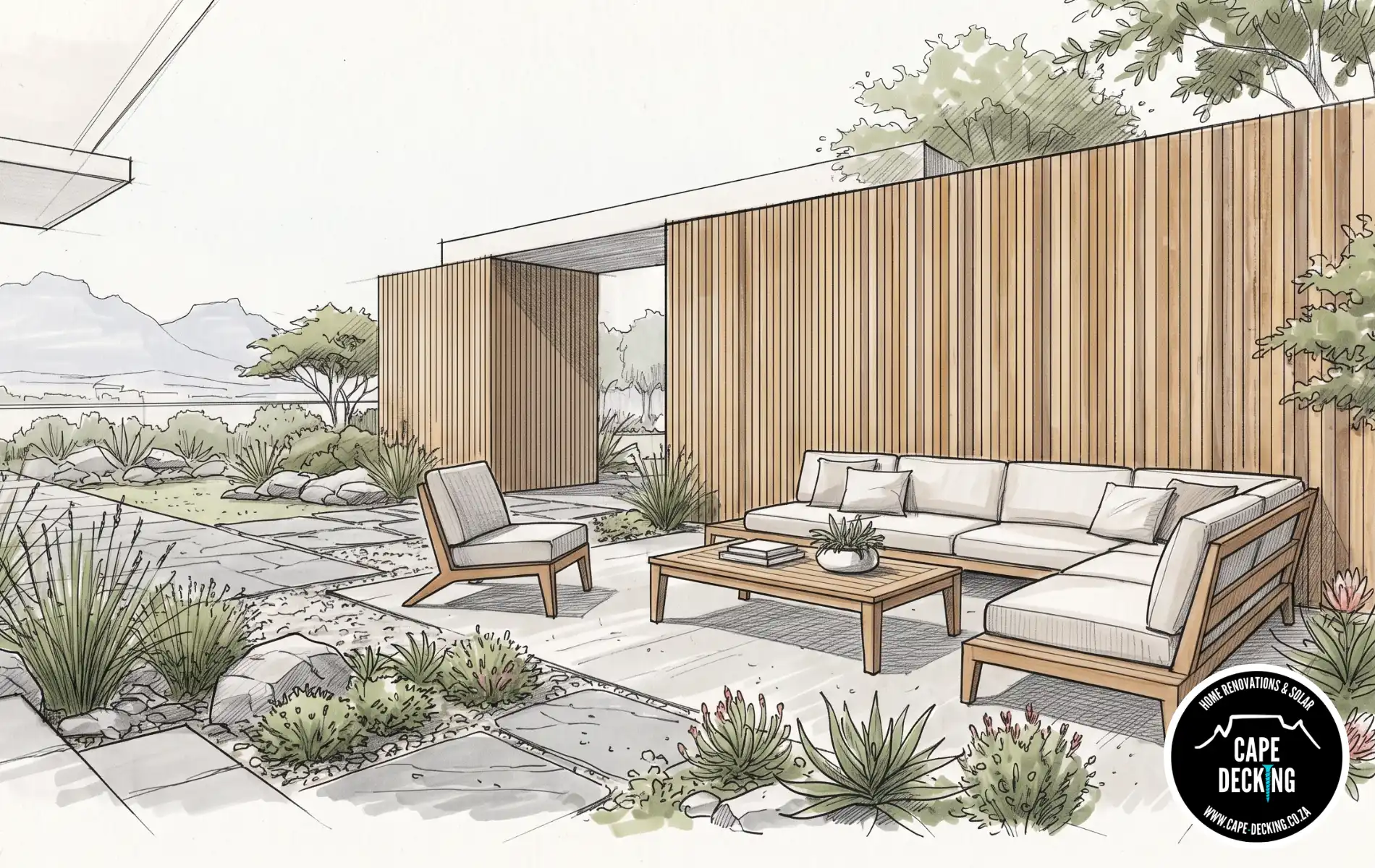
Exterior wall cladding has to survive everything Cape Town throws at it. Summer southeasters, winter rain driving in off the Atlantic, and salt air if you are anywhere near the coast. That rules out a lot of what works inland.
Outdoor wall cladding needs three things right. The timber has to be dense enough to resist moisture movement, which is why we favour Balau and Garapa over softwoods for external work. The battening behind the boards has to create a ventilation gap so the wall can dry out rather than trapping damp against the plaster. And the fixings have to be stainless steel, because galvanised screws will bleed rust streaks down a light timber within a season near the sea.
Common exterior applications: boundary and garden walls, entrance facades, balcony and balustrade faces, carport and garage walls, braai and boma surrounds, and wrapping an existing deck substructure so the deck and wall read as one surface.
Interior wall cladding
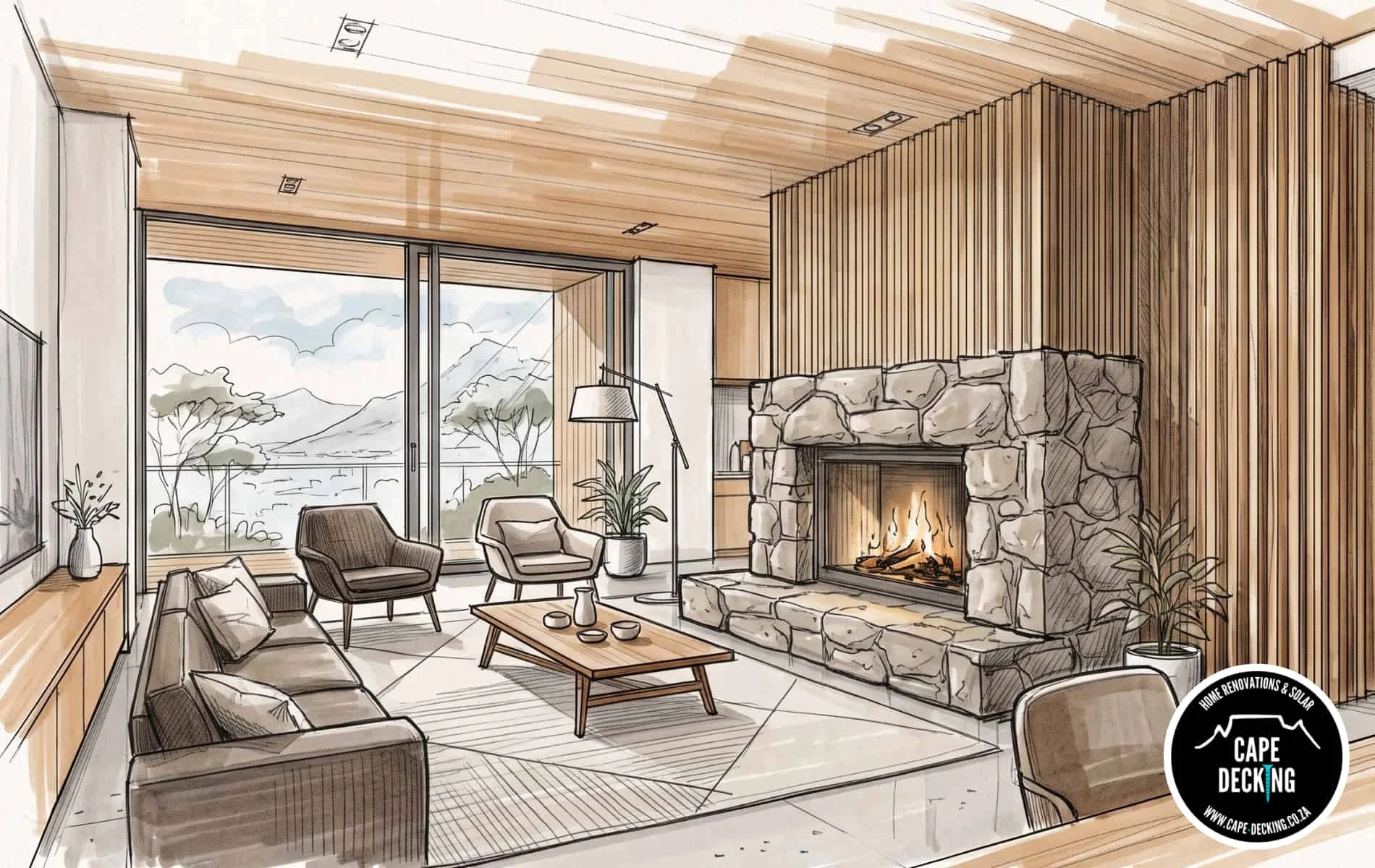
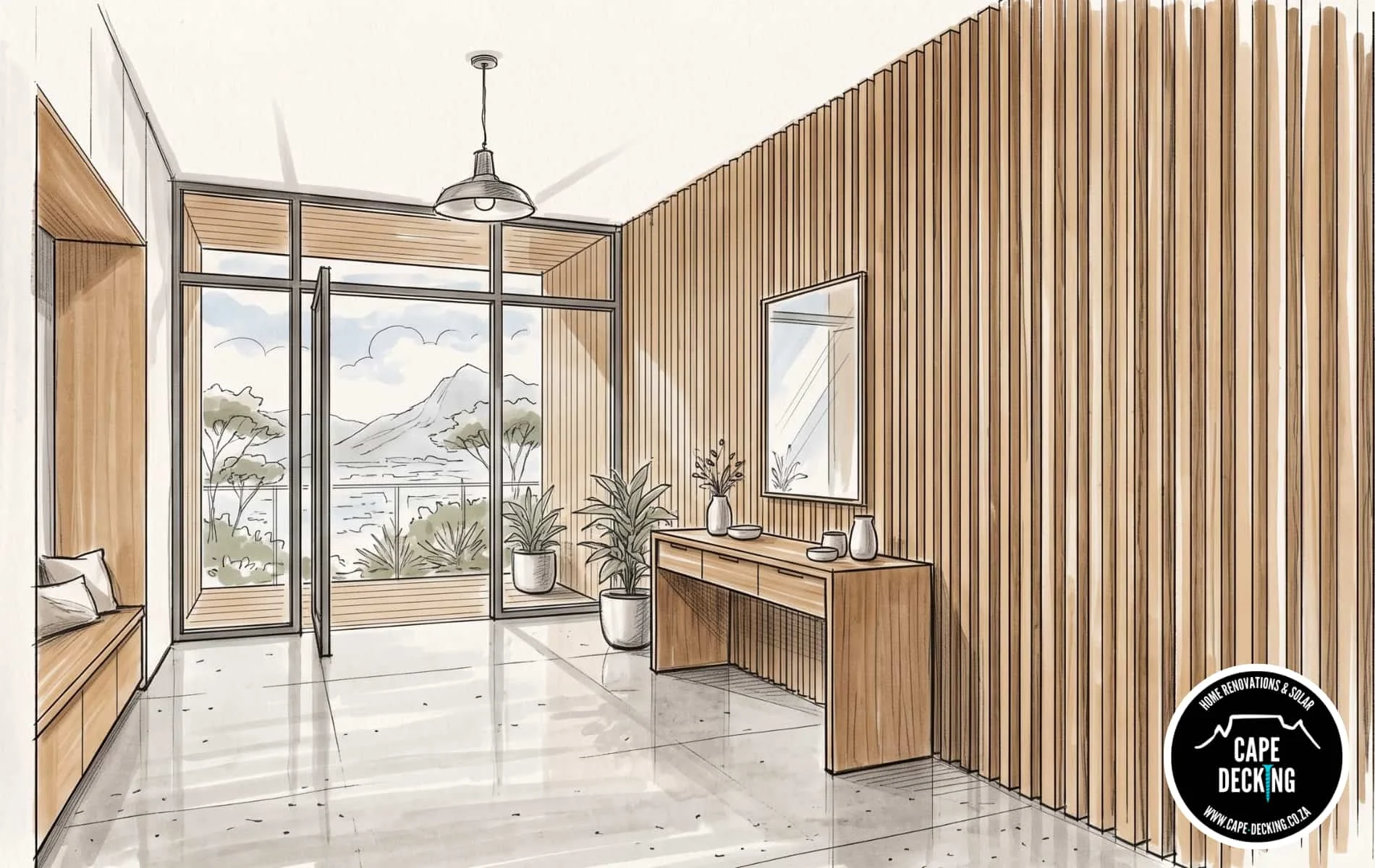
Interior wall cladding is a different job with a different specification. There is no weather to design against, so the timber choice opens up and the emphasis shifts to finish quality and how the boards meet at corners and edges.
Inside, cladding panels work well on feature walls behind a bed or a television, in stairwells and double volume spaces where a flat wall feels cold, in entrance halls, and as an acoustic treatment in open plan living areas where sound carries.
Pine takes paint and stain well and keeps interior costs down. Hardwood cladding suits spaces where the grain itself is the point, and it can be matched to an existing timber floor or staircase so the room reads as one material.
Timber options for wall cladding
Balau
The workhorse for external cladding. Dense, reddish brown, weathers to a silver grey if you leave it and holds a rich colour if you oil it. It is what we use on most exterior walls. More on Balau
Garapa
Lighter, a honey gold that greys off attractively. Slightly softer than Balau and a good choice where you want the wall to lift a dark corner rather than deepen it. More on Garapa
Massaranduba
The densest of the three and the longest lived. It costs more and is heavy enough that the battening specification has to account for it, but on a wall that will never be touched again it is hard to beat. More on Massaranduba
Treated pine
The budget option, and it works well on interior walls and on sheltered exterior walls not exposed to driving rain. It needs sealing more often than hardwood outdoors. More on treated pine
How wall cladding is fitted
The batten frame
Wall cladding wood is fixed to a batten frame rather than straight onto the wall. The battens create the ventilation cavity, give a level plane to work off when the wall behind is not true, and carry the fixings.
Board spacing and direction
A closed joint gives a solid continuous surface. A deliberate shadow gap of 5mm to 10mm creates a linear pattern and helps airflow, which matters on a wall that gets little sun. Boards can run horizontally, vertically or at an angle, and the direction changes how the wall reads at a glance.
Fixings and finish
Boards are fixed with stainless steel screws or hidden clips depending on the look you want. Visible fixings suit a rustic finish. Hidden clips give a clean uninterrupted face and cost a little more in labour.
Wall Cladding Inspiration
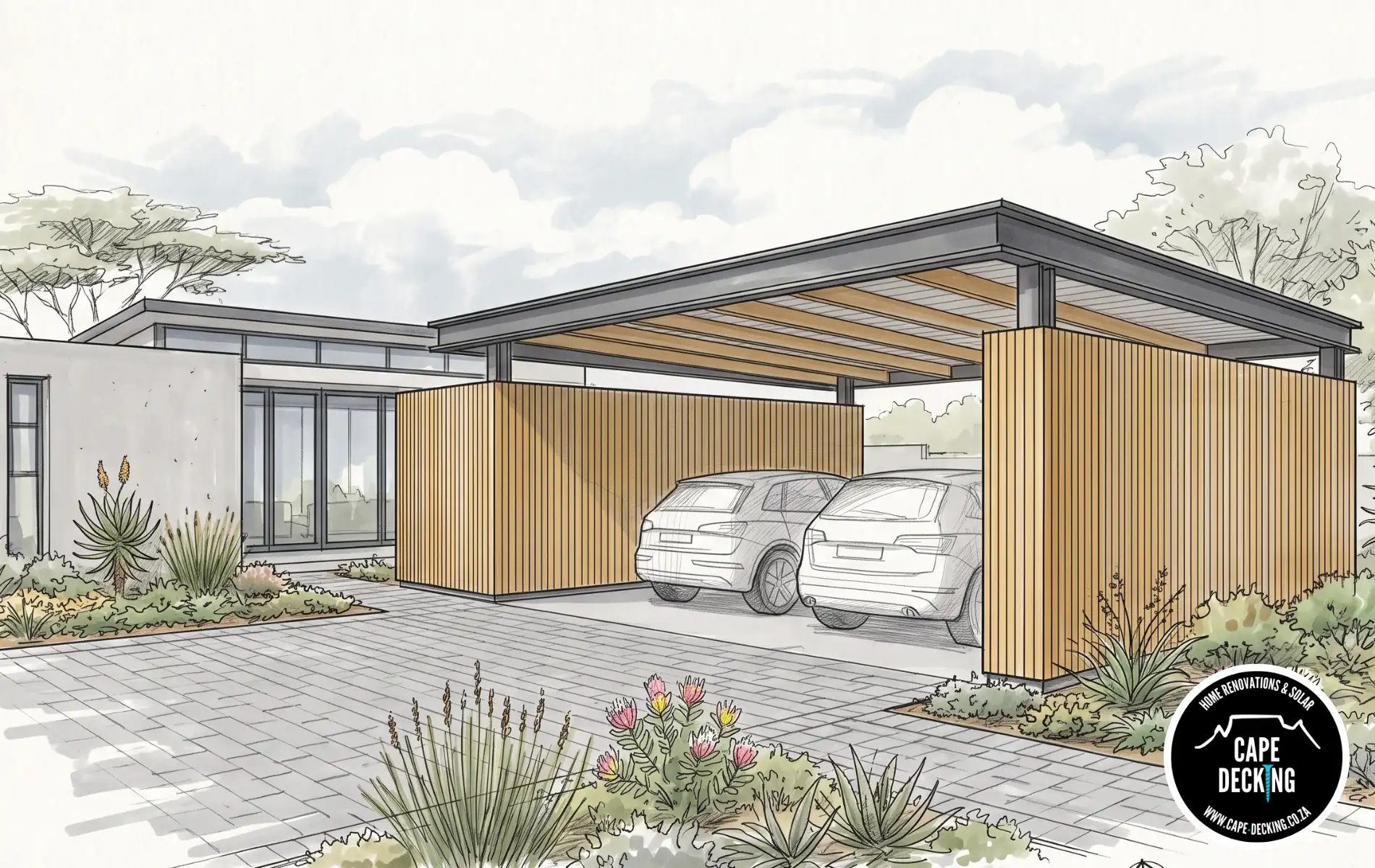
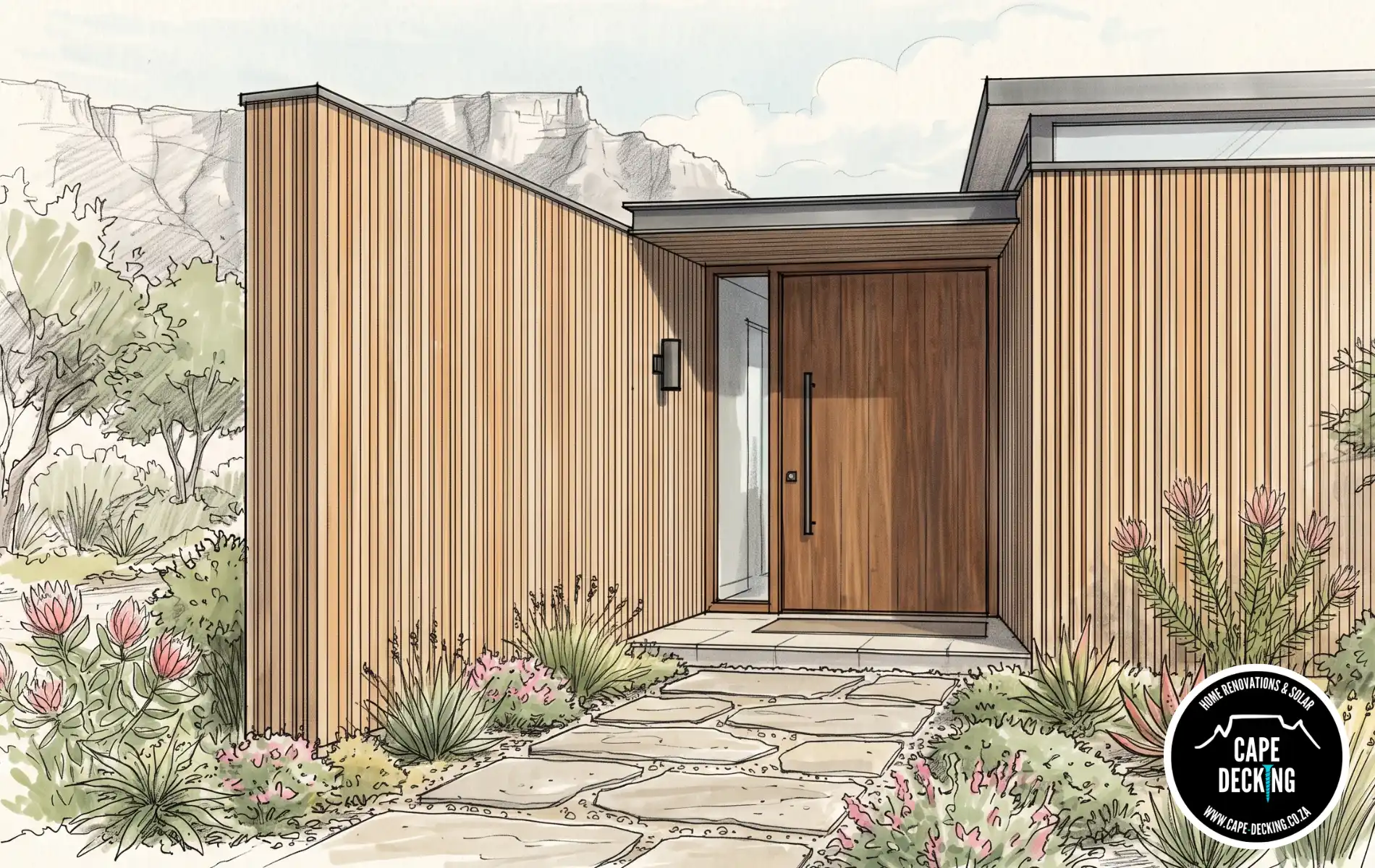
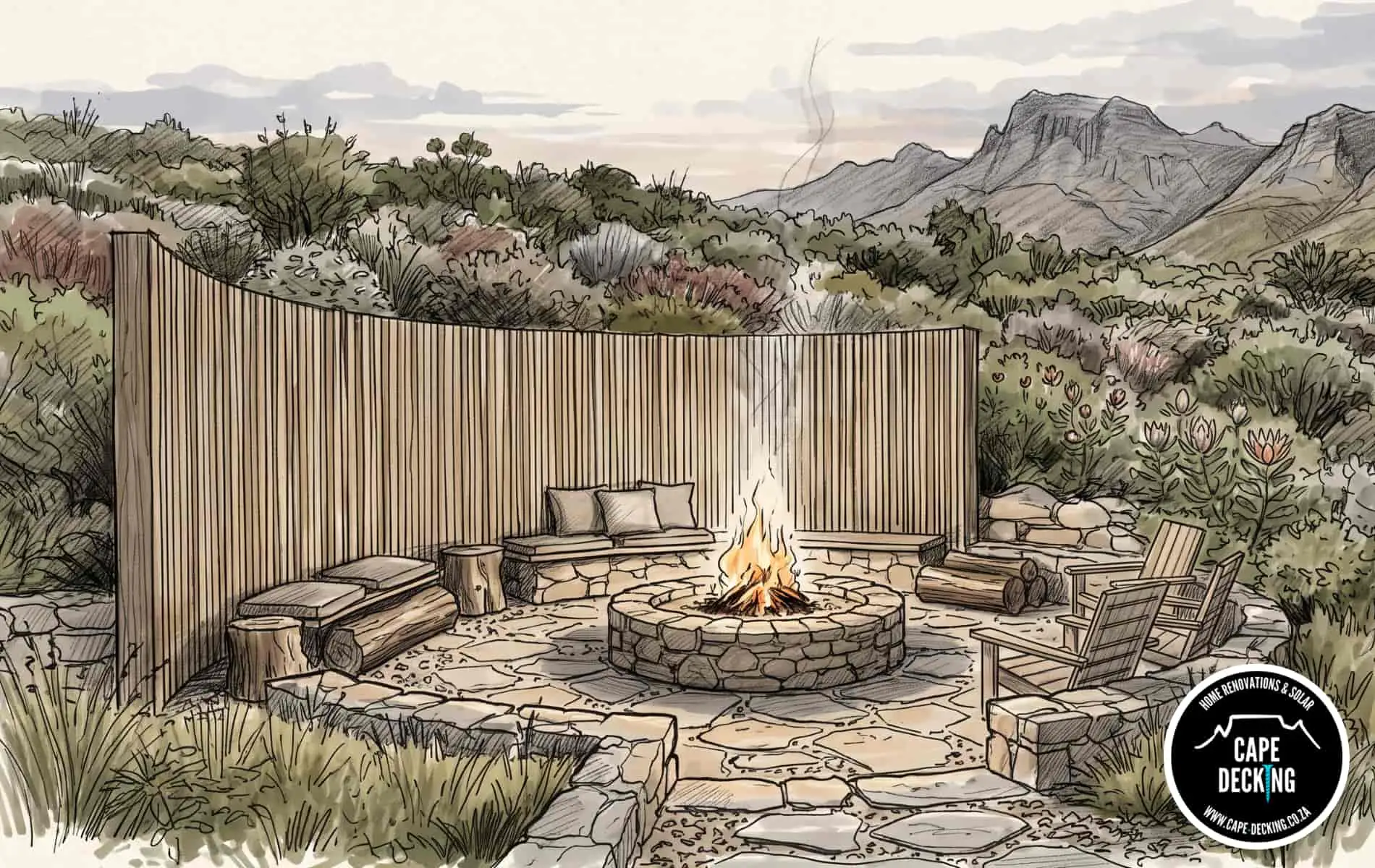
See a completed job in detail on our Balau wall cladding install, or browse more wall cladding projects and ideas.
Where we install wall cladding
We install wall cladding across Cape Town and the surrounding areas. On the Atlantic Seaboard we cover Camps Bay, Clifton, Bantry Bay, Fresnaye, Sea Point, Bakoven and Llandudno. In the Southern Suburbs we work in Constantia, Bishopscourt, Newlands, Rondebosch, Claremont, Kenilworth, Tokai, Bergvliet and Steenberg, and in the City Bowl across Higgovale, Oranjezicht, Tamboerskloof and Gardens.
We also cover the South Peninsula through Hout Bay, Noordhoek, Kommetjie, Fish Hoek and Simon’s Town, the Atlantic coast north of the city at Milnerton, Sunset Beach, Blouberg, Big Bay and Melkbosstrand, Durbanville and the northern suburbs, the Helderberg across Somerset West and Gordon’s Bay, and the Winelands at Stellenbosch, Franschhoek and Paarl.
Coastal and inland sites are specified differently. A wall in Bantry Bay takes a different fixing and finishing approach to the same wall in Durbanville, so we measure on site rather than quoting off a photograph.
Recent wall cladding projects


See a completed job in detail on our Balau wall cladding install, or browse more wall cladding projects and ideas.
Wall cladding questions
You may also be interested in: Wooden Decking, Wooden Fencing, Wooden Latte Fencing, Wooden Flooring, Pergolas