- All
- Aluminium Awnings
- Approval
- Boreholes
- Carport
- Firewood
- Garapa Wood
- Heat Pumps
- Meranti Wood
- Roll On Lawn
- Shadenet Carport
- Solar
- Timber Decking
- Underfloor Heating
- Water Purification
- Waterproofing
If you are simply replacing existing timber decking with composite decking and are not changing the size, height, structure or footprint of the deck, new approval will generally be less likely to be required. Refer to this article on The City of Cape Town recently launched Development Management BOT in September 2026, this is aimed to help homeowners understand building and planning requirements.
The City’s guide gives “replacing floorboards” as an example of minor repairs that do not require approval, but it does not specifically refer to decking boards. Cape Decking therefore does not treat that example as a blanket exemption for deck work. If the scope of your project is uncertain, confirm the requirements with the City before construction begins.
The property owner is responsible for establishing which approvals apply to the project for any additions or modifications to your place you intend to work on and for obtaining the necessary permissions before work starts.
Yes. You can obtain a site assessment and quotation while checking the municipal requirements. Any approvals that are required should be obtained before construction begins.
No. Cape Decking can advise on the practical decking project, materials and installation, but the approval requirements for a property are determined by the relevant authorities and the circumstances of the project.
No. The City’s “Plan and Build it Right – Do I need a Plan?” guide does not specifically list decks. It therefore should not be treated as confirmation that every deck is exempt from approval.
What is the expected lifespan of Garapa wood, and does it hold up well against coastal air and swimming pool splash zones?
This heavy-duty hardwood is incredibly resilient, making Garapa Wood a premier choice for Cape Town’s unforgiving marine and poolside settings.
Expected Lifespan: A professionally constructed Garapa deck will easily endure for 25 to 30 years or more, provided it receives basic structural care.
Poolside and Marine Performance: Sourced from Brazil, this dense timber possesses immense natural stability. This means the boards are highly resistant to twisting, bowing, or cracking, even when continuously exposed to ocean moisture or pool water. Its organic oils offer built-in immunity against rot, termites, and fungal growth.
For homes right on the Atlantic Seaboard or False Bay coast, securing the boards with grade-316 stainless steel fasteners will guarantee your deck remains sound for decades.
Whether you should oil a Garapa deck depends entirely on your preferred aesthetic.To keep the golden look: If you want to maintain its signature honey-golden tone, you must apply a premium, UV-resistant timber oil or sealer once or twice a year.
This shields the timber from the harsh South African sun and stops the color from fading.To let it age naturally: If you prefer a rustic, weathered look, you can leave the wood untreated. Over time, sunlight and rain will bleach the surface into a uniform, elegant silver-grey patina.
Because Garapa is inherently dense and packed with natural protective oils, letting it turn grey will not compromise its underlying strength or resistance to rot.
Carpenters and homeowners love Meranti for a few very practical reasons:
Stunning Aesthetics: It offers a natural, rich warmth ranging from pale pinkish-red to a deep, regal reddish-brown that instantly elevates any space.
Excellent Stability: Once properly seasoned, Meranti is highly resistant to warping, twisting, or shrinking. This makes it perfect for moving parts like doors and window frames.
Workability: It is an incredibly “friendly” wood to work with. It cuts cleanly, holds screws tightly, glues easily, and takes stains or varnishes beautifully.
We delivery a selection of Firewood in Cape Town subject to availability.
- Bluegum Firewood
- Port Jackson Firewood
- Black Wattle Firewood
- Rooikrans Firewood
Installation time for underfloor heating depends on the system type and the scale of the project. A single-room electric mat or cable installation can typically be completed within one working day. Larger electric installations across multiple rooms may take two to three days. Hydronic systems require coordination with screeding, plumbing, and flooring contractors, a full installation across a larger home can take several days to a week.
For new builds, the ideal time to install underfloor heating is during the screed or subfloor stage, before tiling or floor coverings are laid. Retrofitting is possible but more disruptive and costly. Cape Decking works closely with homeowners, contractors, and architects across Cape Town to align installation with your project schedule.
Plan your underfloor heating installation with Cape Decking or read the full guide here.
Most modern floor coverings work well with underfloor heating when paired with the right system. Ceramic and porcelain tiles are the most efficient, they conduct and retain heat effectively and are a natural fit for Cape Town homes. Natural stone performs similarly well. Engineered wood and luxury vinyl planks are also compatible, provided the thermal resistance (tog) rating falls within the recommended range.
Thick carpet and solid hardwood can reduce heating performance and may not be suitable depending on the system specified. Cape Decking assesses floor compatibility as part of every quote, so there are no surprises once installation begins.
Get a floor compatibility assessment from Cape Decking or read the full underfloor heating guide for Cape Town here.
Cape Town’s winters are consistently cool and damp, and underfloor heating in Cape Town has become the go-to solution for homeowners who want reliable warmth without wall-mounted heaters or gas systems. It delivers even, radiant heat across the full floor surface, rising naturally through the room without the dry air or noise of forced-air alternatives.
From an investment perspective, underfloor heating adds measurable value to a property, increasingly expected in high-spec homes across the Atlantic Seaboard, Southern Suburbs, and Winelands. For developers and architects, it’s fast becoming standard on new build specifications. For homeowners renovating, it’s a practical upgrade that improves both comfort and resale appeal.
Speak to Cape Decking about underfloor heating for your Cape Town property or learn more about your options through our blog post here.
Underfloor heating price in South Africa depends on the system type, area size, and installation complexity. Electric systems typically range from R200 to R600 per square metre for supply and installation. Hydronic systems, which involve more pipework and components, generally start at R800 per square metre and can exceed R1,500 per square metre for larger or more complex projects.
While hydronic systems carry a higher upfront underfloor heating cost, their running costs are lower over time, making them a strong long-term investment for bigger homes and developments. Always request a detailed quote that covers materials, labour, thermostat controls, and any subfloor preparation work.
Request your free underfloor heating price from Cape Decking or for a full breakdown of system types and installation advice read our blog here.
When it comes to underfloor heating, South African homeowners and developers have two main systems to choose from. Electric systems use heating cables or mats that sit beneath your floor surface, they’re cost-effective to install and ideal for single rooms or smaller areas like bathrooms and kitchens. Hydronic systems use a network of pipes carrying heated water across the floor and are better suited to larger spaces where long-term running cost efficiency matters most.
Both systems can be paired with smart thermostats and timers to manage energy use effectively. The right choice depends on your floor coverage area, property type, and budget. Cape Decking offers honest, no-pressure consultation to help you choose with confidence.
To get expert advice on underfloor heating contact Cape Decking or you can read our complete guide here.
It keeps maintenance low. Once fully dried, it combusts so efficiently that it leaves behind almost zero messy soot, minimal ash, and very little sticky creosote build-up inside your flue.
This wood packs an intense thermal punch. Because the timber is incredibly dense, it acts like a slow-release fuel cell, throwing out radiant heat for hours while keeping your wood consumption low.
ddd
What Is Kikuyu Lawn & Kikuyu Grass Advantages
- Kikuyu grass is a fast-growing, warm-season lawn grass widely used across South Africa, particularly in sunny regions like Cape Town. It is easily recognised by its bright green colour, coarse texture, and vigorous growth habit, spreading rapidly through runners to form a dense lawn.
- One of Kikuyu’s biggest advantages is how quickly it establishes. It’s often used in new gardens or landscaping projects where fast ground coverage is needed. Once established, it becomes relatively drought-tolerant, making it well-suited to Cape Town’s dry summers and water restrictions.
- Kikuyu lawn performs best in full sun and struggles in heavily shaded areas. It is also highly resilient to foot traffic, which makes it a popular choice for family gardens, outdoor spaces, and areas that see regular use. However, its aggressive growth can also be a drawback.
- Without regular mowing and edging, Kikuyu can spread into flower beds, paving, and other landscaped areas. It requires consistent maintenance to keep it neat and under control. Overall, Kikuyu grass roll on lawn is ideal if you’re looking for a hardy, affordable, and fast-establishing lawn that thrives in sun and can handle wear and tear unlike Buffalo Grass & LM Berea Grass
Buffalo Lawn Explained
Buffalo grass is a popular lawn grass known for its broad, soft leaves and excellent shade tolerance, making it a preferred option for gardens that don’t receive full sun throughout the day. It forms a thick, carpet-like lawn that feels comfortable underfoot, which is why it’s often chosen for residential spaces.
Unlike faster-growing grasses like Kikuyu Grass roll on lawn, Kikuyu VS Buffalo grass – Buffalo grass grows more slowly and in a more controlled manner. This makes it significantly easier to maintain, as it requires less frequent mowing and edging. It’s also less invasive, meaning it won’t aggressively spread into surrounding garden beds.
Buffalo grass performs well in both sun and partial shade, although it truly stands out in shaded areas where other grasses may thin out or struggle. It also has moderate water requirements and can retain its lush appearance with less frequent watering compared to some other lawn types.
Because of its soft texture and dense growth, Buffalo grass is ideal for families with children and pets. However, it is slightly less tolerant of heavy foot traffic compared to Kikuyu and may take longer to recover from wear.
Overall, Buffalo grass is best suited for homeowners looking for a low-maintenance, visually appealing lawn that performs well in shade and provides a soft, comfortable surface. If you are looking for Buffalo grass comparison to LM Berea Grass, click this article here.
LM Berea Grass Explained
LM Berea grass is a fine-textured, evergreen lawn grass known for its neat appearance, slow growth, and excellent shade tolerance. It is one of the most versatile lawn options in South Africa, performing well in both sunny and shaded areas. This grass type forms a dense, uniform lawn with a softer, more refined look compared to coarser grasses like Kikuyu. Because it grows more slowly, LM Berea requires less frequent mowing, making it a popular choice for homeowners seeking a low-maintenance garden solution.
LM Berea also retains moisture well, which helps it stay greener for longer with moderate watering. This makes it a practical option in regions like Cape Town, where water conservation is often a priority. One of its standout features is its ability to thrive in shaded environments, making it ideal for gardens with trees, walls, or buildings that limit direct sunlight.
However, it is less tolerant of heavy foot traffic and may not be the best choice for high-use areas like play spaces. Worth reading about the comparisons between LM Grass, Kikuyu vs Buffalo Grass. Overall, LM Berea grass is best suited for homeowners who want a tidy, evergreen lawn that requires minimal upkeep and performs well in both sun and shade.
Whether you need council approval for a shadenet carport in Cape Town depends on the size of the structure and where it sits on your property. In general, smaller shade structures that are not permanently enclosed and do not exceed certain height and footprint thresholds may fall within what is classified as a minor building work, which does not always require formal approval.
That said, the City of Cape Town does have specific zoning and building plan requirements, and these vary by suburb and property type. If your carport is attached to your house, exceeds a certain size, or falls within a conservancy or heritage area, you will likely need to submit building plans.
We strongly recommend checking with the City of Cape Town’s Development Management department or speaking to a local architect before starting any installation. Our team can connect you with a selection of architectural partners if needed subject to availability.
Related links:
Shadenet carports: Shadenet Carports Cape Town
Architectural design services: Architectural Design Cape Town
All carport types: Carports Cape Town
Aluminium carports: Aluminium Carports
Get in touch: Contact Us
Pre Installation Roll On Lawn Preparation Work
Good preparation is what separates a lawn that takes well from one that struggles in the first few months. Start by removing all existing weeds, grass, stones and debris from the area. We do this for you! Weeds left in the soil will push through your new lawn, so it is worth taking the time to do this properly rather than rushing it.
Once the area is clear, level the soil and add a 50 to 100 mm layer of good-quality topsoil or compost. We supply compost as an additional offering but is a must for your lawn to root down and get the required nutrients. In very sandy area’s this base layer should be 100-200 mm thick. We do this for you!
This improves drainage, yet at the same time retains moisture, adds nutrients and gives your roll on lawn the best possible base to root into. Lightly water the prepared bed before you lay the rolls, and make sure each roll is pushed firmly against the last with no gaps between them.
Water thoroughly straight after installation and keep the soil moist for the first two to three weeks while the roots are establishing. After that, you can ease off gradually as the lawn settles in.
If you live in an area with sandy soil such as Hout Bay where there is a lot of dune / beach sand, you will require an even thicker base layer or your lawn with dry out, in summer it will bake from the top and the bottom and kill your lawn if the base layer is not thick enough to retain moisture. We have a solution.
Compost depth, coir fibre, and bentonite clay – the three-layer solution for Cape coastal gardens losing water straight into the dunes. Read more about this in our article “How to Build a Lawn That Survives on Sand?”
Cape Decking teams supply and install Kikuyu Grass, LM Grass and Buffalo Grass across Cape Town. If you would like a quote or discuss what grass variety suits your space, read our comparisons between kikuyu vs buffalo grass or other grass FAQ’s here or get in touch via the link below.
Kikuyu vs Buffalo Grass Explained
These two varieties of roll on lawn get compared a lot, and they do overlap in some ways. Both cope reasonably well with South African conditions, but they suit different types of gardens.
Kikuyu lawn grows fast, spreads aggressively and handles heavy foot traffic without much trouble. It is the better option for gardens with children, dogs, or outdoor areas that see regular use. The tradeoff is that it needs more frequent mowing and it will try to spread into your flower beds if you are not keeping on top of edging.
Buffalo grass is a broader-bladed, slower-growing grass that uses less water and needs less maintenance than kikuyu. It handles some shade and is less likely to invade surrounding beds because it does not spread as energetically. For water-conscious homeowners, or for gardens that do not see heavy traffic, buffalo grass is a very practical choice.
If durability and fast recovery matter most, go kikuyu. If water savings and low maintenance are your priority, buffalo grass is worth a serious look. If you are looking for the comparison between Kikuyu vs LM grass, find out more here.
See all roll on lawn options & get a quote in this link here or click below.
Kikuyu vs LM grass
The honest answer depends on your garden. If you have a sunny, open space that gets a lot of use, kikuyu lawn is probably the better choice.
Kikuyu Grass grows fast, spreads quickly and bounces back from wear in a way that LM grass simply cannot match. It does grow faster though, which means you will be mowing more often during the growing season.
LM Grass suits gardens that have trees, structures or fencing that creates shade for part of the day. It has a finer leaf and a softer texture than kikuyu, and it grows more slowly, so the maintenance load is lower. If your garden is relatively sheltered and not subject to heavy traffic, LM grass will give you a neater, lower-maintenance surface.
The short version: kikuyu wins on toughness and recovery, LM grass wins on texture and low maintenance. Your garden conditions will tell you which matters more. Find out more about Buffalo Grass as an option and the difference between Kikuyu vs buffalo grass here.
The number of solar panels a home needs is directly tied to monthly electricity consumption. Most South African households using between 600 and 800 kWh per month will require:
- 8 to 14 solar panels based on individual panel wattage
- A 5kW to 8kW inverter
- Sufficient battery capacity to cover overnight and load shedding demand
One advantage of being in Cape Town or the Western Cape is the region’s exceptional sunshine, averaging 5 to 6.5 peak sun hours daily, which allows panels to generate more energy per unit than in lower-sunshine areas, sometimes reducing the total number of panels required. To find out more read here on how to Find the right system size at Cape Decking or Read our full solar sizing breakdown
The final solar panel price you’re quoted comes down to a combination of technical and logistical factors. The most common price drivers include:
- System size in kilowatts – directly proportional to cost
- Battery type and capacity – lithium batteries add value but increase the upfront price meaningfully
- Inverter specification – hybrid inverters cost more but are essential for load shedding protection
- Roof access and complexity – steeper or more complex roofs take longer to install on
- Installer and region – Cape Town and broader Western Cape pricing varies between suppliers
The golden rule when comparing solar panel quotes is to ensure you’re comparing the same specifications across every quote, brand, wattage, warranty, and battery capacity included. For more information Explore Cape Decking’s solar options or Read more in our Solar Panels blog
When you weigh up the solar panel price against long-term savings, the investment case in South Africa is compelling. Here is why:
- Eskom tariff increases have been consistent and show no sign of slowing
- A properly sized solar panel system can cut your electricity bill by 70–100%
- The average payback period is 4 to 7 years, after which energy production is effectively free
- Solar panels carry a standard 25-year performance warranty
- Cape Town and the Western Cape rank among South Africa’s highest sunshine regions, maximising panel output and shortening your ROI timeline
For homeowners who have been sitting on the fence, 2026 is one of the strongest years yet to act, competitive installer pricing, improved battery technology, and ongoing grid uncertainty make the decision easier than ever.
For more information Visit Cape Decking’s solar page or Read our full Is Solar Worth It blog
Solar panels on their own will not keep your home powered during load shedding. A grid-tied system is legally required to shut down when the grid goes offline, regardless of how much sunlight is available. The solution is a hybrid solar system with battery storage, which:
- Charges batteries throughout the day using solar energy
- Draws from those batteries the moment the grid cuts out
- Switches back to grid power automatically once supply is restored
Across South Africa, and particularly in Cape Town and the Western Cape where load shedding disruption is well documented, hybrid systems have become the standard recommendation for any new solar installation in 2026.
For more information See Cape Decking’s hybrid solar solutions or Read our load shedding solar guide
Solar panel prices in South Africa sit anywhere between R60,000 and R250,000+ once installed, depending on how large a system your home requires and whether battery storage is included. To give you a clearer picture:
- 3–5kW system: R60,000 – R100,000
- 5–8kW system: R100,000 – R160,000
- 10kW+ system: R160,000 – R250,000+
Prices across Cape Town and the Western Cape are broadly consistent with the national average, though installer rates and local supplier stock levels can shift your final quote. Request an itemised breakdown that separates panels, inverter, batteries, and labour before making any decision. For more information View solar panel pricing at Cape Decking or Read our full Solar Panels Price guide here
A heat pump is an energy-efficient device that transfers heat from one place to another rather than generating heat directly. In South Africa, heat pumps are most commonly used to heat water or swimming pools. They extract warmth from the surrounding air and use it to heat water, using up to 70% less electricity than a conventional electric geyser or pool heater.
Think of it as your fridge working in reverse, instead of removing heat from inside, it pulls heat from outside and puts it to work.
Heat pump prices in South Africa vary based on size, brand, and application. As a general guide:
Domestic water heat pumps ≈ R8,000 to R18,000 installed
Pool heat pumps ≈ R15,000 to R35,000 installed
Commercial heat pumps ≈ R30,000 and above depending on scale
The upfront cost is offset by significant savings on your monthly electricity bill. Most homeowners see a return on investment within 2 to 4 years. Want an accurate quote? Get a free heat pump quote from Cape Decking today.
This is one of the most common questions homeowners ask, and the honest answer is: it depends on your situation.
Heat pumps work day and night, in cloudy conditions, and require no roof space or direct sunlight. Solar geysers rely on sunlight and are less effective in overcast conditions, though they can be cheaper upfront.
For consistent, reliable hot water with minimal electricity use, a heat pump is often the smarter long-term choice.
A standard heat pump requires electricity to operate and will not function during load shedding unless paired with a battery backup or solar PV system. However, because heat pumps are so energy efficient, they place far less demand on your backup power system than a conventional geyser would.
Pairing a heat pump with solar panels is an increasingly popular solution across South Africa.
A pool heat pump South Africa homeowners love is exactly what it sounds like, a system that heats your swimming pool efficiently throughout the year. South Africa’s climate makes pool heat pumps extremely effective, as even mild ambient air temperatures allow the system to work well.
- Extends your swimming season by months
- Uses up to 80% less electricity than a traditional pool heater
- Low maintenance with a long lifespan of 10 to 15 years
If you have a pool, a heat pump is one of the best upgrades you can make.
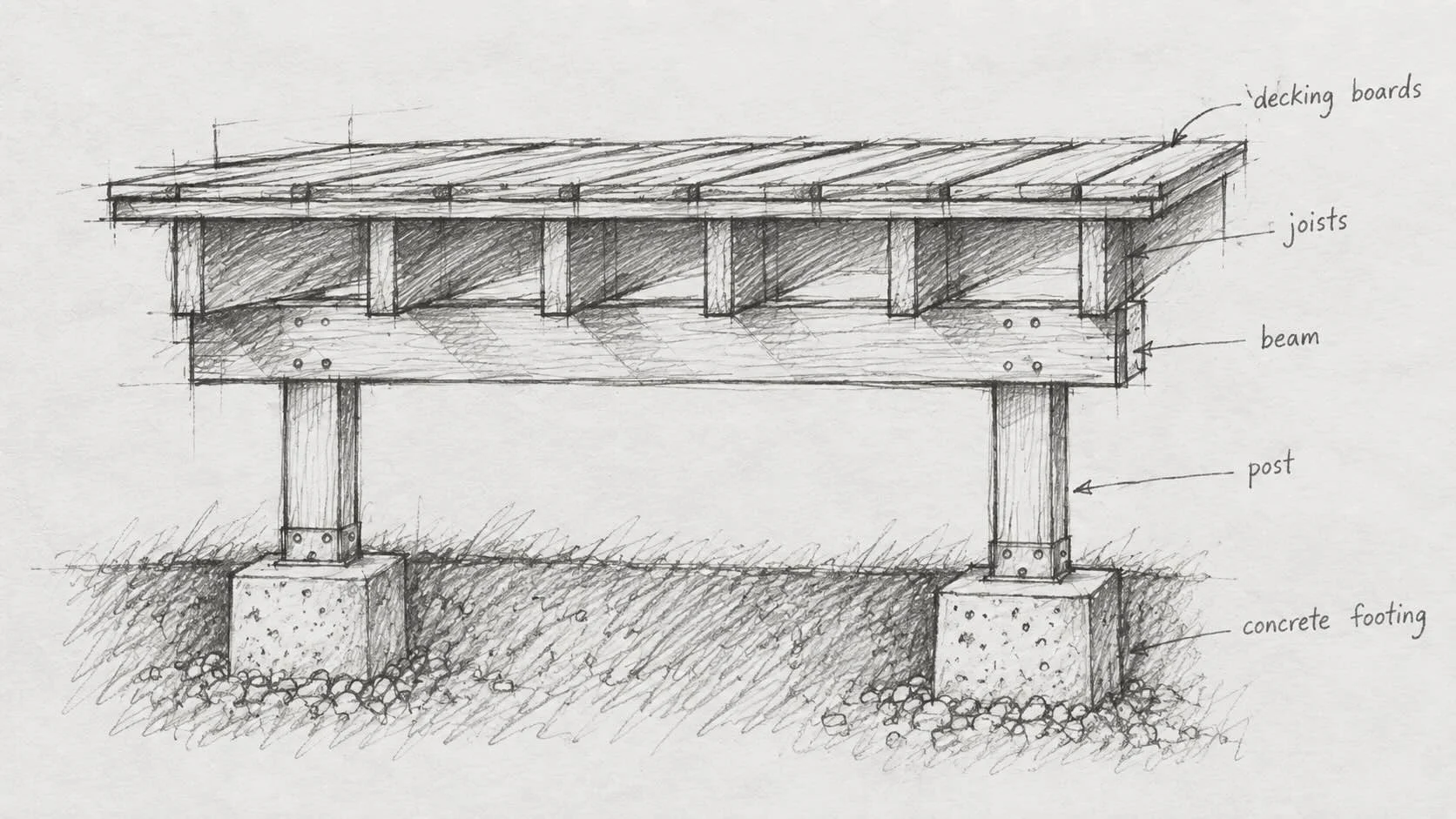
A treated pine deck lasts 15 to 20 years with regular maintenance (resealing every 2 to 3 years). Hardwood decks – Balau, Garapa, and Massaranduba – last 25 to 30 years with periodic oiling. Cape Town’s coastal climate demands quality timber and proper treatment to maximise lifespan. The substructure quality and installation workmanship are equally important. A well-built hardwood deck can outlast the home it’s attached to.
The best wood depends on your budget and priorities. For affordability, treated pine offers excellent value at R1,700 to R2,200 per m² installed. For durability and low maintenance, Balau and Garapa are the top choices in Cape Town – both resist moisture, insects, and weathering exceptionally well. Garapa offers a golden tone while Balau provides a richer reddish-brown colour. Read more about decking wood prices in South Africa and explore our wooden decking options.
Not necessarily. Entry-level composite decking starts around R1,800 per m² – similar to treated pine. Premium composite ranges up to R4,500 per m². The advantage of composite is near-zero maintenance, which can make it cheaper over 15 to 20 years. However, timber offers natural warmth, can be refinished, and often costs less upfront. Compare both options with our composite decking range or get a quote for both materials.
Timber decking prices in Cape Town range from R1,700 to now R4,000 per m² fully installed in 2026.
Treated pine sits at the lower end (R1,700 – R2,200 per m²), while premium hardwoods like Balau and Garapa range from R2,800 to R4,000 per m². These prices include materials, substructure, and labour. Extras like balustrades, stairs, and sealing are additional.
Prices fluctuate subject to fuel prices, supplier pricing and changes to local VAT & Tax laws but that is the estimate for 2026!
Contact us for a free quote to get an accurate price for your property.
Read the full guide to council approval for decks in Cape Town here.
For many homeowners in Cape Town, carports are a more cost-effective and flexible alternative to a standard garage. While garages offer full enclosure and security, they require extensive construction, higher material costs, building plans, and longer installation timelines.
Carports provide reliable vehicle protection from sun, wind, and rain at a significantly lower investment. Modern aluminium carports, steel carports, timber carports, and solar carports are engineered for durability and can be custom-designed to suit your property layout. In high-wind areas like Cape Town, professionally installed steel or reinforced aluminium carports offer excellent structural performance.
If budget is your main consideration, our guide “Carport Prices Explained – Cape Town” breaks down the cost differences between carports and more permanent structures. If you’re comparing materials and design options, read “Choosing the Right Carport: Aluminium, Steel, and Wood Options” to determine which carport type best suits your needs.
Ultimately, the best choice depends on your budget, space, and whether you prioritise affordability, flexibility, or full enclosure.
Carports are available in a variety of sizes and materials. When selecting the right carport in Cape Town, it’s important to factor in wind exposure, coastal weather conditions, and long-term durability.
- Steel carports offer maximum structural strength for high-wind areas.
- Aluminium carports are rust-resistant and ideal for coastal properties.
- Timber carports provide a classic aesthetic but require regular maintenance.
- Solar carports must be engineered to withstand wind loads while securely supporting solar panels.
For a complete comparison of aluminium, steel, wood, and solar carports, including durability, maintenance, and design considerations, see our guide: “Choosing the Right Carport: Aluminium, Steel, and Wood Options.”
Yes, aluminium awnings are highly suitable for Cape Town’s coastal and high-wind conditions. Aluminium is naturally corrosion-resistant, making it ideal for properties exposed to salt air. Unlike steel or timber, aluminium does not rust or warp, which reduces long-term maintenance costs.
For windy areas, professionally installed aluminium awnings and louvre awnings can be engineered to meet structural requirements, ensuring durability and long-term performance.
If you’re evaluating patio awnings, entrance awnings, or adjustable louvre awnings for your property, our detailed guide “Choosing the Right Aluminium Awning in Cape Town” explains material benefits, design options, and installation considerations in depth.
Adjustable louvre awnings offer superior flexibility compared to standard patio awnings. The rotating aluminium blades allow you to control sunlight, airflow, and rain protection throughout the day. When fully closed, the interlocking louvres form a watertight roof with built-in drainage, making them ideal for Cape Town’s changing weather conditions.
Benefits of louvre awnings include:
- Adjustable sunlight and shade control
- Improved ventilation and temperature regulation
- Modern architectural design
- Low maintenance aluminium construction
- Increased property value
To understand how adjustable aluminium louvre awnings compare to fixed aluminium awnings, read our full article: “Choosing the Right Aluminium Awning in Cape Town.”
Awning prices in Cape Town vary depending on size, design, and whether you choose fixed patio awnings or adjustable aluminium louvre awnings. Fixed aluminium awnings are generally more affordable, while motorised louvre awnings cost more due to their adjustable blades, integrated drainage systems, and optional lighting features.
Pricing depends on:
- Patio, balcony, or entrance coverage size
- Fixed vs adjustable aluminium louvre design
- Motorisation and automation
- Wind-load engineering for Cape Town conditions
- Installation complexity
For a detailed breakdown of aluminium awnings prices, system comparisons, and installation considerations, read our complete guide: “Choosing the Right Aluminium Awning in Cape Town.”
Carport prices in Cape Town vary depending on size, material, engineering requirements, and installation complexity. Steel carports and aluminium carports typically fall into the mid-range price bracket, while timber carports and solar carports are considered higher-end due to customization and structural requirements.
Single carports are more affordable than double carports, and solar carports with battery storage represent a premium investment due to energy generation benefits.
For a full breakdown of sizes, materials, and updated cost ranges, read our detailed guide: “Carport Prices Explained, Cape Town, What You Need to Know Before You Buy.” This article outlines pricing comparisons for steel, aluminium, timber, shade cloth, and solar carports in Cape Town.
In most cases, a single car shadenet carport can be installed in one day. A double car shadeport typically takes one to two days depending on the site. The actual time on the day depends on a few things: the ground conditions (concrete footings need time to set), how accessible the site is, and whether the carport is a standalone structure or being attached to an existing wall or building.
Sites that need extra ground preparation, such as rock breaking or drainage work, will take longer. Our installation teams will give you a realistic timeline when they come out to assess the site. We do not rush installs as a properly set footing is what keeps the structure solid in Cape Town’s wind.
Related links:
Shadenet carport installation: Shadenet Carports Cape Town
All carport types: Carports Cape Town
Steel carport options: Steel Carports
Get a free site assessment: Contact Us
The shade percentage tells you how much sunlight the shadecloth blocks. Here is a simple way to think about it:
- 30% shade: Lets in plenty of light and airflow. Good for mild climates or areas where ventilation matters more than full sun block.
- 40% shade: A popular middle ground. Reduces heat and UV meaningfully without making the space feel closed in.
- 50% shade: The best option for vehicle protection in Cape Town’s summer. Blocks the bulk of UV radiation and keeps your car’s interior noticeably cooler.
For most residential carports in Cape Town, a 40% to 50% shade net is the most practical choice. If you are unsure, our team can advise based on your specific location and how the sun tracks across your property.
Related links:
Shadenet carport options: Shadenet Carports Cape Town
All carport types compared: Carports Cape Town
Book a site visit: Contact Us
The main difference comes down to what level of protection and budget you are working with.
A shadenet carport uses UV-rated shadecloth stretched over a steel or galvanised frame. It keeps the sun off your vehicle, reduces interior heat build-up, and offers some protection from light rain and wind. It is the most affordable option and is quick to install.
An aluminium carport gives you a fully weatherproof roof, usually in IBR sheeting, a flat profile, or insulated panels. It is a more permanent structure and provides complete protection from rain, hail, and the sun. It costs more and takes longer to install, but it adds more value to your property and suits areas with heavier winter rainfall.
For many Cape Town homeowners, a shadenet carport is a practical starting point, especially for areas with moderate weather. If you are on the Atlantic Seaboard or somewhere that sees heavy south-easterly winds, a steel or aluminium structure may be the better long-term choice.
Related links:
Shadenet carports: Shadenet Carports Cape Town
Aluminium carports: Aluminium Carports Cape Town
All carport options: Carports Cape Town
Get a free quote: Contact Us
Shadenet carport prices in Cape Town depend on the size, shade percentage, and frame finish you go with. As a rough guide, a single car shadeport starts from around R4,500 for a basic 30% shade net on a standard steel frame, and runs up to R16,000 for a premium 50% shade option with a powder-coated frame and fascia trim.
A double car shadenet carport sits between R9,000 on the entry level and R28,000 at the top end. Keep in mind that final pricing also takes into account your site conditions, the ground type, wind exposure, and whether any concrete work is needed for the footings.
Related links:
Full carport price comparison: Shadenet Carports
All carport types: Carports Cape Town
Aluminium carport pricing: Aluminium Carports
Get a free quote: Contact Us
Borehole Registration and Permit Requirements – Cape Town
If you’re drilling a borehole for personal, home use, you usually don’t need a permit. However, the City of Cape Town does require you to register the borehole once it’s drilled. If you’re going to use large amounts of water for farming or business, you may need a Water Use Licence from the Department of Water and Sanitation.
Do you need to permit or register a borehole with the City of Cape Town?
Yes – in Cape Town, you must register any borehole or wellpoint after it has been drilled. If you’re planning to drill a new borehole, the City requires that you notify them at least 14 days before the drilling begins. You’ll need to provide information such as the location, erf number, and intended use.
For domestic (home) use, you usually don’t need a national water-use licence. Borehole water used for your home and garden typically qualifies as ‘Schedule 1 use’ under national water regulations.
Where to find the official facts and guidelines
City of Cape Town – Register a borehole or wellpoint:
Apply to sink a borehole or wellpoint:
Cape Town Water By-Law Summary (PDF):
Department of Water and Sanitation (National Guidelines):
What this means for you
– Notify the City of Cape Town 14 days before drilling and submit the required information.
– Once the borehole is drilled, register it as required by the City’s by-laws.
– If your borehole is for home use only, a national licence is usually not needed.
– For larger use (e.g., farming or business), a Water Use Licence from the Department of Water and Sanitation may be necessary.
– Our team at Cape Decking has over 15 years of experience and can help guide you through the process.


When drilling a borehole, we usually go through different layers of soil, clay, rock, and sandstone until we reach a water – bearing layer called an aquifer. Our team has over 15 years of experience in the Cape, so we know what signs to look for – like changes in drill pressure, water traces, or specific rock formations.
Once we hit a layer that produces a steady water yield, we stop drilling and do a yield test to confirm. Every area is different, which is why working with a professional team is important.
Borehole water is a great solution, but like anything, it has a few things to be aware of:
– The water may need to be filtered if it has iron or minerals.
– If the borehole isn’t drilled properly, the water could get contaminated.
– Pumps and systems need a bit of maintenance over time.
That’s why working with a trusted team matters. We’ve been doing this for 15+ years, and we’ll help you avoid the common mistakes and make sure your borehole works properly from day one.
We’ll walk you through what to expect and what’s included. Contact us to get a quotation.
In most areas around Cape Town, Durbanville, or Somerset West, boreholes usually go between 40m and 80m deep – sometimes deeper depending on how far down the water is.
Because we’ve been drilling across the Western Cape for over 15 years, we understand the local soil and groundwater. We’ll guide you on what depth is right for your area.
Get a free quote with expert advice based on your area:
Borehole Drilling Prices:
The cost to drill a borehole depends on how deep we need to go, the ground conditions, and what’s included – but most residential boreholes in Cape Town cost anywhere between R60,000 and R200,000 all – in. Sometimes more depending on the depth of the hole and location, motor & parts.
We’ve been drilling boreholes for over 15 years, so we know how to give you an accurate, all – inclusive quote up to 60 metres – no hidden extras. After 60 meters we charge per meter.
📍 Want a proper quote with everything included? Find out more here and contact us for a quotation.
Yes, hydronic underfloor heating is seen as a premium feature that improves comfort, energy efficiency, and aesthetics by eliminating bulky radiators. Many buyers view it as a luxury upgrade, which can increase the desirability and value of a property.
Hydronic underfloor heating systems are highly durable, with pipework lasting 40–50 years or more if properly installed. The manifolds, pumps, and boilers/heat pumps may need replacement every 15–20 years, but the system overall is a long-term investment in comfort and efficiency.
Yes, hydronic underfloor heating can be retrofitted into existing homes, though it may involve lifting flooring and increasing floor height slightly. It is most cost-effective when installed during new builds or major renovations. In-screed and over-floor panel systems are available for retrofits.
Yes, hydronic underfloor heating is generally more cost-effective to run compared to electric systems, especially for larger areas. It uses heated water circulated through pipes and can be powered by energy-efficient heat pumps or solar systems, reducing long-term energy expenses.
Hydronic underfloor heating is a heating system that uses warm water circulated through pipes installed beneath the floor surface. The heated water gently warms the floor, which then radiates heat evenly throughout the room. This system is energy-efficient, provides consistent comfort, and can be powered by a variety of heat sources such as gas boilers, heat pumps, or solar systems. It is especially popular in South Africa for homeowners seeking a modern, cost-effective, and long-lasting home heating solution.
On average, electric underfloor heating costs between R400 and R1,200 per month depending on the size of the space and how frequently it is used.
Contact us to schedule in an appointment, we can also install a solar system to make it more cost effective to run underfloor heating.
The cost per m² for electric underfloor heating is between R1,000 and R2,500, while water underfloor heating costs between R2,000 and R3,800 per m². It is subject to your current flooring type, square meterage per room.
Contact us to schedule in an appointment.
Electric underfloor heating is cheaper to install (R1,000 – R2,500 per m²) and best for small rooms, but running costs are higher (R400 – R1,200/month).
Water underfloor heating systems cost more upfront (R2,000 – R3,800 per m²) but are cheaper to run (R300 – R800/month), making them ideal for larger homes.
Contact us to schedule in an appointment to find out what the options are between electric vs water underfloor heating systems. We can also install a solar system to make it more cost effective to run underfloor heating.
Electric underfloor heating does increase electricity usage, but thanks to its efficiency, it is often more affordable than using heaters or air conditioning. Water-based systems are even more cost-effective long-term.
Contact us to schedule in an appointment, we can also install a solar system to make it more cost effective to run underfloor heating.
The installation time for underfloor heating depends on the room size and system type. A small room may take 1–2 days, while a whole house installation can take 1–2 weeks.
Contact us to schedule in an appointment and learn how to make the underfloor heating installation more cost effective with the installation of a solar system.
Yes, underfloor heating works very well under tiles. Tiles are excellent heat conductors, making them one of the most efficient flooring types for electric and water underfloor heating systems.
Contact us to find out how to make your underfloor heating installation more cost effective with a solar system.
Yes, underfloor heating can be used under laminate or wood flooring, but the system must be installed correctly with proper insulation to prevent overheating and to ensure energy efficiency.
Contact us to find out how to make your under wooden flooring underfloor heating installation more cost effective with a solar system.
Yes, underfloor heating is considered a luxury feature in South Africa. It not only improves comfort and energy efficiency but also increases the resale value of your property.
Contact us to find out how to make your underfloor heating installation more cost effective with a solar system.
When installed professionally, underfloor heating systems can last for more than 25 years. Electric heating mats and water pipes are highly durable and require minimal maintenance.
Contact us to find out how to make your underfloor heating installation more cost effective with a solar system.
Electric underfloor heating is cheaper to install and is ideal for small rooms such as bathrooms or kitchens. Water underfloor heating is more expensive upfront but is better for larger areas and whole-house heating due to lower running costs.
No, underfloor heating is generally cost-effective to run compared to heaters and air conditioners. Electric underfloor heating typically costs between R400 – R1,200 per month, while water systems are even cheaper in the long term due to better efficiency.
The cost of underfloor heating in South Africa ranges from R1,000 – R2,500 per m² for electric systems and R2,000 – R3,800 per m² for water systems. Installation costs for an average room can range from R25,000 to R70,000+ depending on the system type and floor size.
Before connecting borehole water to your home, business, or swimming pool, you should do a comprehensive water test to check for:
-
- pH levels (to prevent corrosion or scale buildup).
- Bacteria and microbial contaminants (E. coli and coliform bacteria).
- Iron, manganese, and other heavy metals (which cause staining and discoloration).
- Nitrates and pesticides (especially in agricultural areas).
Professional laboratory testing or a borehole water analysis will help determine the right filtration system for safe use.
For expert advice and installation of borehole water filtration systems, contact us for a free consultation and water analysis!
Borehole water can have several issues, including:
-
- High iron and manganese content, leading to brown stains on plumbing and laundry.
- Hard water (high calcium and magnesium levels), causing scale buildup in pipes and appliances.
- Bacteria and contaminants, which can pose health risks.
- Unpleasant odors or taste, often due to sulfur or organic matter.
A proper filtration and purification system is key to resolving these problems.
The filtration system you need depends on the quality of your borehole water. Common treatments include:
-
- Sediment filters to remove sand, dirt, and debris.
- Activated carbon filters to reduce chlorine, bad taste, and odors.
- Iron removal filters to prevent staining of fixtures and appliances.
- Reverse osmosis (RO) systems for drinking water purification.
- UV sterilization to kill bacteria and viruses.
A water test is essential to determine the right water filtration system.
Borehole water can be used in swimming pools, but it often contains high mineral content, iron, and other impurities that can cause staining, cloudiness, and algae growth. To prevent these issues, it’s recommended to use a pre-filtration system and a water softener before filling your pool. Regular water testing and proper chemical balancing are also necessary.
Yes, borehole water can be used for home or business purposes, but it must be properly treated before being connected to your plumbing system. Borehole water may contain sediment, bacteria, heavy metals, and minerals that need to be filtered out to ensure safe use. A filtration and purification system is essential for making the water safe for drinking, cooking, and cleaning.
Yes! We specialize in custom water filtration solutions tailored to your specific business needs, whether for restaurants, offices, factories, or medical facilities. Contact us for a free consultation and quotation to find the best system for you.
Maintenance depends on the system type and usage. Most filters need replacement every 6 to 12 months, while reverse osmosis membranes typically last 2 to 5 years. We offer professional servicing to ensure your system runs efficiently.
Whole-house filtration systems significantly improve water quality by removing sediment, chlorine, heavy metals, and some bacteria, but they may not eliminate all contaminants. Advanced systems with UV purification or reverse osmosis provide additional protection. We can help you choose the right system based on your water source.
The ideal system depends on your water usage and quality requirements. Reverse Osmosis (RO) systems are popular for businesses needing high-quality water, while UV purification and activated carbon filters work well for general filtration. We can assess your needs and recommend the best solution.
Acrylic Waterproofing: This liquid-applied waterproofing solution uses acrylic resin to form a flexible, UV-resistant membrane. It’s easy to apply and provides excellent protection against water, making it suitable for roofs, balconies, and foundations, with the added benefit of flexibility and breathability.
Acrylic waterproofing is a type of liquid-applied waterproofing solution that uses an acrylic-based resin as its primary ingredient. When applied to surfaces like roofs, walls, and foundations, the acrylic resin forms a flexible and durable membrane that provides excellent protection against water penetration.
Key Features of Acrylic Waterproofing:
- Flexibility: One of the main advantages of acrylic waterproofing is its flexibility. It can expand and contract with the substrate, which is especially beneficial for surfaces that experience movement due to temperature changes or structural settling.
- UV Resistance: Acrylic waterproofing coatings are highly resistant to ultraviolet (UV) rays from the sun. This makes them ideal for outdoor applications where the surface will be exposed to direct sunlight, such as roofs or balconies.
- Easy Application: Acrylic waterproofing is relatively easy to apply. It is usually applied as a liquid that can be brushed, rolled, or sprayed onto the surface. The coating dries quickly to form a seamless, durable membrane.
- Waterproofing Protection: Once applied, the acrylic membrane provides excellent protection against rain, water ingress, and moisture buildup. It creates a water-resistant barrier that is resistant to mildew, mold, and algae growth.
- Breathability: Acrylic-based coatings are breathable, meaning they allow moisture trapped within the structure to evaporate, reducing the risk of water damage and deterioration from trapped moisture.
- Durability: Acrylic waterproofing is resistant to weathering and is able to withstand harsh environmental conditions like heavy rain and extreme temperatures, making it ideal for areas with high humidity or rain.
Common Applications:
- Roofs: Acrylic waterproofing is often used for flat or sloped roofs to prevent water leakage and damage.
- Balconies and Terraces: It’s used to prevent water seepage that could damage underlying structures.
- Basements and Foundations: Acrylic coatings help keep moisture from penetrating the building, particularly in below-grade applications.
- Walls: Acrylic waterproofing can be applied to external walls to prevent water ingress and deterioration.
In summary, acrylic waterproofing is a versatile and effective solution for protecting surfaces from water damage, especially in environments where flexibility, UV resistance, and easy application are essential.
Cementitious waterproofing is a method of applying a waterproof barrier to surfaces using a mixture that contains cement-based products, typically combined with other additives like sand, resins, and chemicals. The resulting mixture is applied as a slurry or coating to create a waterproof layer on the surface.
This type of waterproofing is commonly used for areas that need protection against water ingress, such as foundations, basements, bathrooms, swimming pools, and other wet areas. The key benefits of cementitious waterproofing include:
- Ease of Application: Cementitious waterproofing is relatively easy to apply, requiring only basic tools like a brush, trowel, or spray equipment. It is typically mixed with water to form a slurry, which can then be applied to the surface.
- Durability: The cementitious coating is durable and offers excellent protection against moisture, preventing the penetration of water into structures.
- Cost-Effective: Cementitious waterproofing is often more affordable compared to other waterproofing methods, making it a popular choice for many construction projects.
- Non-Toxic: As it is cement-based, this type of waterproofing is non-toxic and safe for use in areas like water tanks and swimming pools.
- Versatility: It can be used on various surfaces such as concrete, masonry, brick, and plaster.
The application typically involves cleaning and preparing the surface, mixing the cementitious product with water, and then applying it in multiple coats for maximum effectiveness. Once cured, the surface becomes waterproof, providing long-lasting protection against water damage.
Torch-On Waterproofing: This method uses heat to melt and bond a bituminous membrane to surfaces, creating a seamless, durable waterproof barrier. It’s commonly used on roofs, particularly flat or low-slope ones, and is known for its long-lasting protection against water.
Torch-on waterproofing is a method of applying a waterproofing membrane to surfaces, typically roofs, using heat to bond the membrane to the substrate. This technique involves using a torch (usually a gas torch) to melt the underside of a bituminous (asphalt-based) membrane, which is then rolled onto the surface to form a seamless waterproof barrier.
The process works by:
- Heating the Membrane: The bituminous membrane is heated using a propane torch until the underside becomes tacky and soft.
- Applying to the Surface: The membrane is then rolled onto the surface (such as a roof or foundation), bonding securely as it cools down.
- Creating a Seamless Layer: The heat-fused membrane creates a smooth, continuous layer that is highly resistant to water penetration.
Torch-on waterproofing is popular in South Africa for roofing applications because of its durability, flexibility, and ability to form a reliable barrier against water and moisture. It is often used in flat or low-slope roofs, as well as areas that require long-lasting waterproofing protection. The torch-on membrane is especially effective for areas that experience heavy rainfall or have challenging environmental conditions.
Silka Waterproofing is a specialized range of waterproofing solutions designed to offer effective protection against water ingress in various construction applications. Silka products are typically based on advanced technologies, such as polymer-modified systems, that combine high-performance resins with reinforcing agents for enhanced durability.
Sika Waterproofing is a brand that offers a range of products designed for waterproofing applications, primarily used in construction projects. In South Africa, Sika is well known for its high-quality waterproofing solutions that help protect buildings and structures from water damage. Their product range includes liquid membranes, coatings, sealants, and systems for both residential and commercial buildings.
Sika’s waterproofing products are commonly used for applications such as roof waterproofing, basement waterproofing, foundation protection, and in areas with high moisture exposure. Their products are highly regarded for their durability, performance, and ability to withstand the harsh weather conditions often found in South Africa.
Overall, Sika Waterproofing provides effective solutions to ensure long-lasting protection against water ingress, which is crucial for maintaining the structural integrity of buildings.
The primary advantage of Silka Waterproofing is its ability to create flexible, long-lasting, and crack-resistant barriers that adapt to temperature changes and structural movements. This makes it ideal for challenging environments, including roofs, walls, and foundations that face extreme weather conditions or water exposure.
Silka Waterproofing is easy to apply and generally requires minimal maintenance, providing reliable water protection while also being cost-effective. It’s commonly used in both residential and commercial projects, offering tailored solutions for areas like basements, parking decks, and exposed surfaces that need long-term moisture resistance.
Net metering in South Africa is a billing system that allows homeowners and businesses with solar PV installations to sell excess electricity back to the grid. Here’s how it works:
- Electricity Generation: Solar panels generate electricity during the day.
- Usage and Excess: You use some of this electricity to power your home or business. Any excess electricity is fed back into the grid.
- Credits: The excess electricity is tracked by a bi-directional meter, and you receive credits for the electricity you contribute to the grid.
- Offsetting Bills: These credits can be used to offset your electricity bill when you use more power than you generate, such as at night.
Net metering provides several benefits, including cost savings on electricity bills, a reduced carbon footprint, and a return on investment for solar energy users
For more detailed information, you can visit this post on net metering.
Interested in getting a quote for a solar solution? Click here to get a quote and start your journey towards energy independence today!
Answer: Getting started is easy! Simply contact us to arrange a free consultation. We’ll assess your energy needs, design the perfect system for you, and provide an accurate quote. Contact us today to take the first step toward a sustainable energy future.
Answer: Solar panels require minimal maintenance. Regular cleaning and an annual inspection are usually sufficient to keep your system operating efficiently. We offer maintenance packages to ensure your system runs smoothly. Reach out to us for more details.
Answer: If your system produces excess energy, you can sell it back to the grid through net metering, reducing your electricity bills. In an off-grid setup, extra energy is stored in batteries for later use. Contact us to discuss how we can help you maximize your solar power.
Answer: Solar installation typically takes between 3 to 7 days, depending on the system size and complexity. We ensure efficient and timely installations to minimize disruption to your home or business. Get in touch today to schedule your installation.
Answer: Yes, there are tax incentives available for businesses and homeowners who install solar systems in South Africa. These include rebates for certain solar installations. We can help guide you through the process. Contact us for more information.
Answer: The system size you need depends on your energy consumption. Our team will assess your usage and recommend the optimal system for your home or business. Book a free consultation to get a personalized recommendation.
Answer: Solar panels are designed to last for 25 to 30 years with minimal maintenance. Their efficiency will gradually decrease over time, but they will continue to generate power for decades. Ready to invest in a long-lasting energy solution? Contact us to get started.
Answer: No, you don’t have to be connected to the grid. You can opt for an off-grid solar system, especially in remote areas. We provide both grid-tied and off-grid solar solutions. Reach out to us to discuss which option is best for you.
Answer: Yes! South Africa enjoys plenty of sunshine, making solar energy a reliable and sustainable energy source. With the right system and components, solar can provide power year-round, even during the cloudy season. Let us help you ensure a steady power supply—contact us for a consultation.
Answer: The cost of solar panel installations varies depending on system size and requirements. For a 3kW system, prices typically range from R45,000 to R75,000, a 5kW system ranges from R70,000 to R120,000, and a 10kW system can range from R140,000 to R250,000. These prices depend on factors like roof type, location, and system complexity. Contact us for a free, tailored quote.
If you’re searching for borehole drilling near me, Cape Decking offers professional borehole drilling services throughout Cape Town and surrounding areas. Borehole drilling is an essential solution for homeowners, businesses, and farms seeking a reliable and sustainable water source. Whether you’re in the heart of the city or in nearby areas, we can assist with expert borehole drilling services.
Our Borehole Drilling Services Include:
- Comprehensive site assessments and surveys
- Expert drilling with modern equipment
- Professional installation of borehole pumps
- Ongoing maintenance and servicing
Contact us for a quotation.
Looking for a borehole installer near me, do you live in Cape Town, Somerset West, Dubanville? We offer our borehole drilling services in the greater Cape Town region. Contact us to get a free quotation.
If you’re searching for borehole installers near me, you have found the best borehole drilling service near me, and the best prices at Cape Decking. Our team of professional borehole installers provides expert services across Cape Town and surrounding areas. Whether you’re looking to install a borehole for your home, business, or farm, we offer reliable and efficient installation to ensure a steady water supply.
Our Borehole Installation Services Include:
- Site evaluations and feasibility studies
- Professional borehole drilling and installation
- High-quality pumps and water systems installation
- Ongoing maintenance and support
Contact us to get a quotation.
Yes we offer residential borehole drilling services in the greater Cape Town and surrounding region. Contact us to find out more about when we can come to your area and to give you a quotation for borehole drilling pricing.
Several factors can affect borehole drilling prices, including the following.
- Property Location: Geographical area and accessibility of the site. (Where are you, how easy is it to access a site to drill)
- Depth of Drilling: Deeper boreholes require more resources.
- The Geological Conditions: Hard rock formations may necessitate specialized equipment and drill bits, larger rigs, more drill bits.
- Equipment and Technology Used: One can opt for a company to bring in technology, it is not required and just makes the job more expensive. Watch out for those who try to sell you this. Advanced drilling equipment and methods might increase costs.
- Additional Borehole Services: If you need more services such as water quality testing, pump installation, solar power for a solar borehole pump, man hole, pump house, filtration systems, these are all additional costs and not included in the quotation.
It’s recommended to contact us first to obtain a rough estimate, a detailed quote will be provided once we book an appointment with you. Contact us to get a quotation.
Regular maintenance of a borehole is crucial to ensure its longevity and efficiency. Maintenance practices include:
- Routine Inspections:
Regularly check all components, including the pump, pipes, and electrical connections, for signs of wear or damage. - Water Quality Testing:
Periodic testing to detect any changes in water quality. - Cleaning:
Removing any sediment or biofilm buildup that could affect water flow and quality. - Servicing the Pump:
Ensuring the pump operates efficiently and addressing any mechanical issues promptly.
Engaging with professionals for regular maintenance can help in early detection of potential problems and prolong the lifespan of the borehole system.
Contact us to get a quotation and to find out more about borehole maintenance services.
Borehole water can be a reliable source for household use; however, it’s essential to test the water quality before consumption. Groundwater may contain minerals or contaminants that require treatment to meet health standards. Regular testing and appropriate filtration or purification systems can ensure the water is safe for drinking and other household purposes. Contact us to find out more.
Several factors can affect the cost of drilling a borehole, including:
- Location: Geographical area and accessibility of the site.
- Depth of Drilling: Deeper boreholes require more resources.
- Geological Conditions: Hard rock formations may necessitate specialized equipment.
- Equipment and Technology Used: Advanced drilling methods might increase costs but offer better efficiency.
- Additional Services: Such as water quality testing, pump installation, and filtration systems.
It’s recommended to obtain detailed quotes from reputable drilling companies to understand the specific costs for your project. Contact us to get a quotation.
The duration of the borehole drilling process can vary based on factors such as the geological conditions of the site and the required depth to reach a reliable water source. Generally, the drilling itself can be completed within a day or two. However, additional time may be needed for site assessment, obtaining necessary permits, and installing the pump and associated infrastructure. Contact us to find out when you can book us in to drill for you.
In Cape Town, while the National Water Act of 1998 does not require permits for boreholes used for domestic purposes, the City of Cape Town mandates that all boreholes be registered with the municipality. This ensures proper monitoring and sustainable use of groundwater resources. It’s advisable to consult local regulations and obtain any necessary permissions before proceeding with drilling. Contact us to find out more about this process as we have experience and can explain it to you. (read more on this here. resource.capetown.gov.za )
The success rate depends on geological conditions. In some regions, the chances of striking water exceed 90%, while in others, it may be lower. Conducting a professional survey before drilling increases the likelihood of success. Contact us to discuss what our success rates are subject to your geographical location.
A wellpoint is a shallow groundwater extraction system used in areas with a high water table. It consists of a narrow pipe with a filter tip, installed at depths of 3-10 meters, and uses a small pump to draw water to the surface. Wellpoints are ideal for garden irrigation but may not provide enough water for high-demand use.
Contact us to find out if you need a wellpoint or a borehole.
It depends on the water quality. Borehole water may contain minerals, sediments, or bacteria. A water test will determine if filtration or treatment is needed to make it safe for drinking or specific uses. Contact us to find out more.
Water from a borehole is usually stored in a tank, which can be placed on a stand for gravity-fed distribution or connected to a pressure pump for efficient water supply to buildings and irrigation systems. If you only need water to fill up your pool or for irrigation purposes to water your garden, the borehole water does not need to be stored in a tank.
A borehole pump is a specialized pump used to extract water from a borehole. It is typically submersible, meaning it operates underwater, and is powered by electricity or solar energy. The type and size of pump you require is subject to what you need a borehole for, how much water you need to pump per hour, per day. The amount of electricity you need is subject to the above. We can also install a solar solution for your borehole pump so you are completely off the grid and not reliant on Eskom to power your borehole pump.
The depth varies depending on the underground water table. In some areas, water can be found at 20-50 meters, while in others, it may require drilling 100 meters or more. A hydrogeological survey can help determine the best depth for drilling, we will have this discussion with you before coming out to drill or not to drill. Contact us to book an appointment.
To get a borehole, you need to:
- Conduct a hydrogeological survey to assess the likelihood of finding water.
- Hire a professional borehole drilling company.
- Drill to the required depth based on water availability.
- Install casing, piping, and a borehole pump.
- Connect the borehole to a storage tank and filtration system if needed.
Contact us to book a free consultation and to get a free quote.
A borehole is a deep, narrow hole drilled into the ground to access underground water. It is lined with a casing to prevent collapse and is fitted with a pump to extract water for use.
The cost of a water purification system depends on several factors, including system type, water quality, capacity, and installation complexity. Residential systems start from around R2,000, to R150,000 while commercial and industrial solutions can range from R50,000 to over R1 million. For an accurate price, we offer free quotations tailored to your specific needs. Find out more about water purification system prices in our blog post here.