

The Complete Guide to Hydronic Underfloor Heating & Heat Pumps for Large-Scale Installations

Hydronic Underfloor Heating & Heat Pump Solutions for Large-Scale Commercial Projects in South Africa
Hydronic underfloor heating paired with high‑efficiency heat pumps offer businesses and large projects in South Africa a powerful way to cut costs, increase comfort, and boost energy sustainability. Here’s everything companies looking at large installations need to know: what the systems are, where they solve pain points, and how you can plan for success.
What is hydronic underfloor heating + heat pump integration
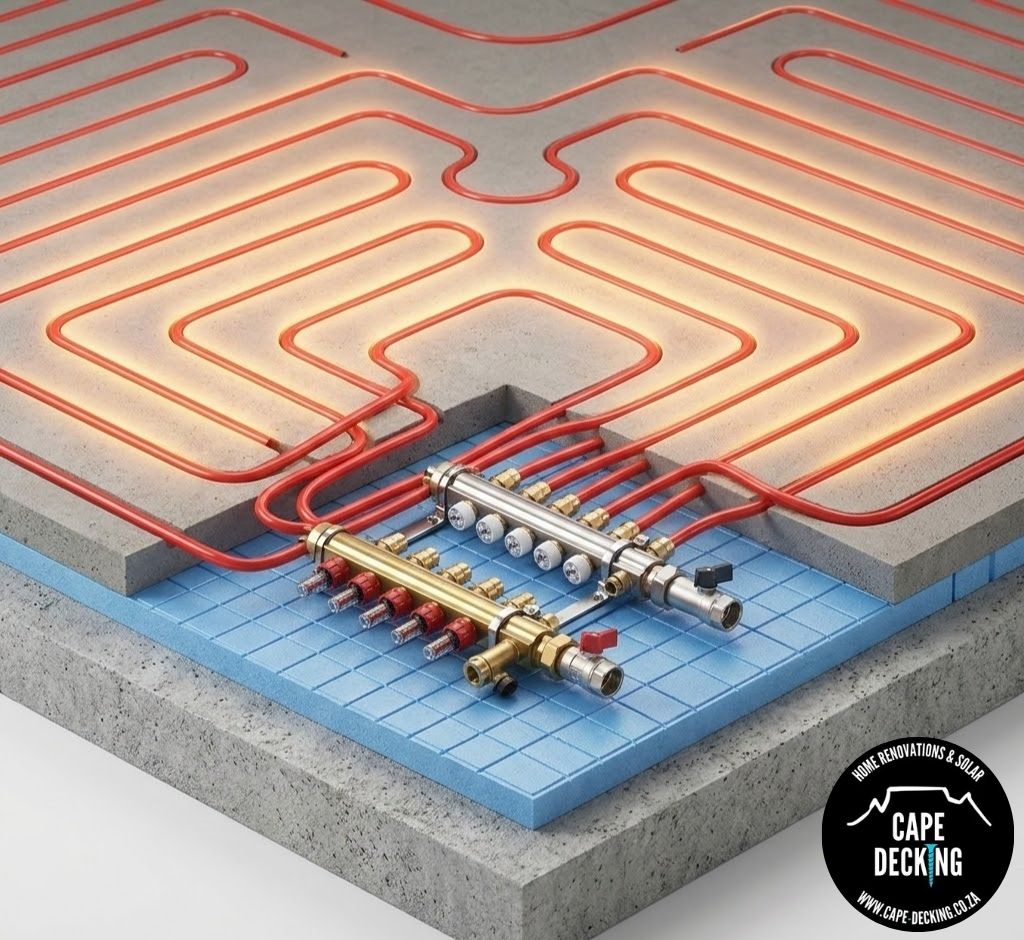
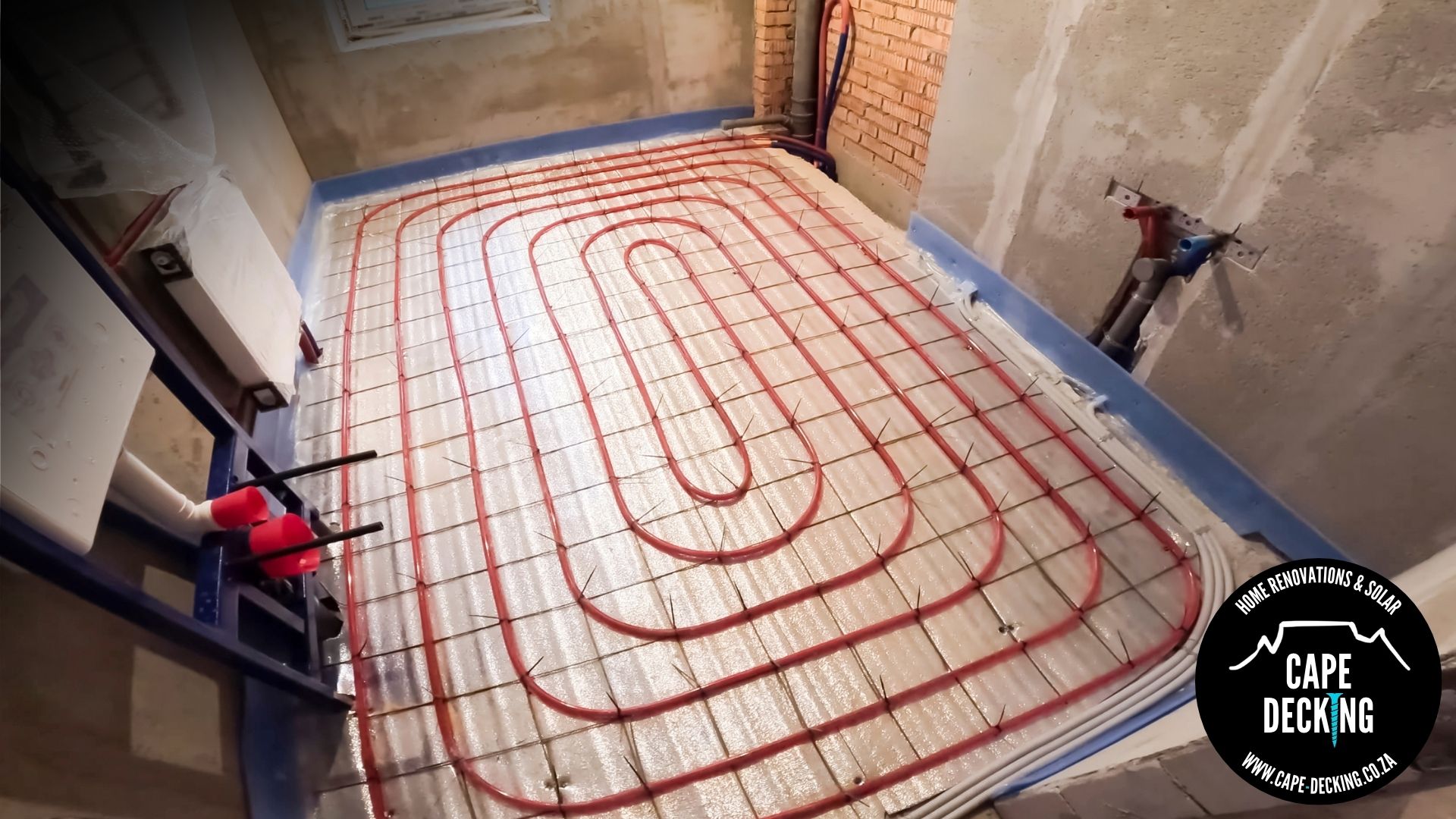
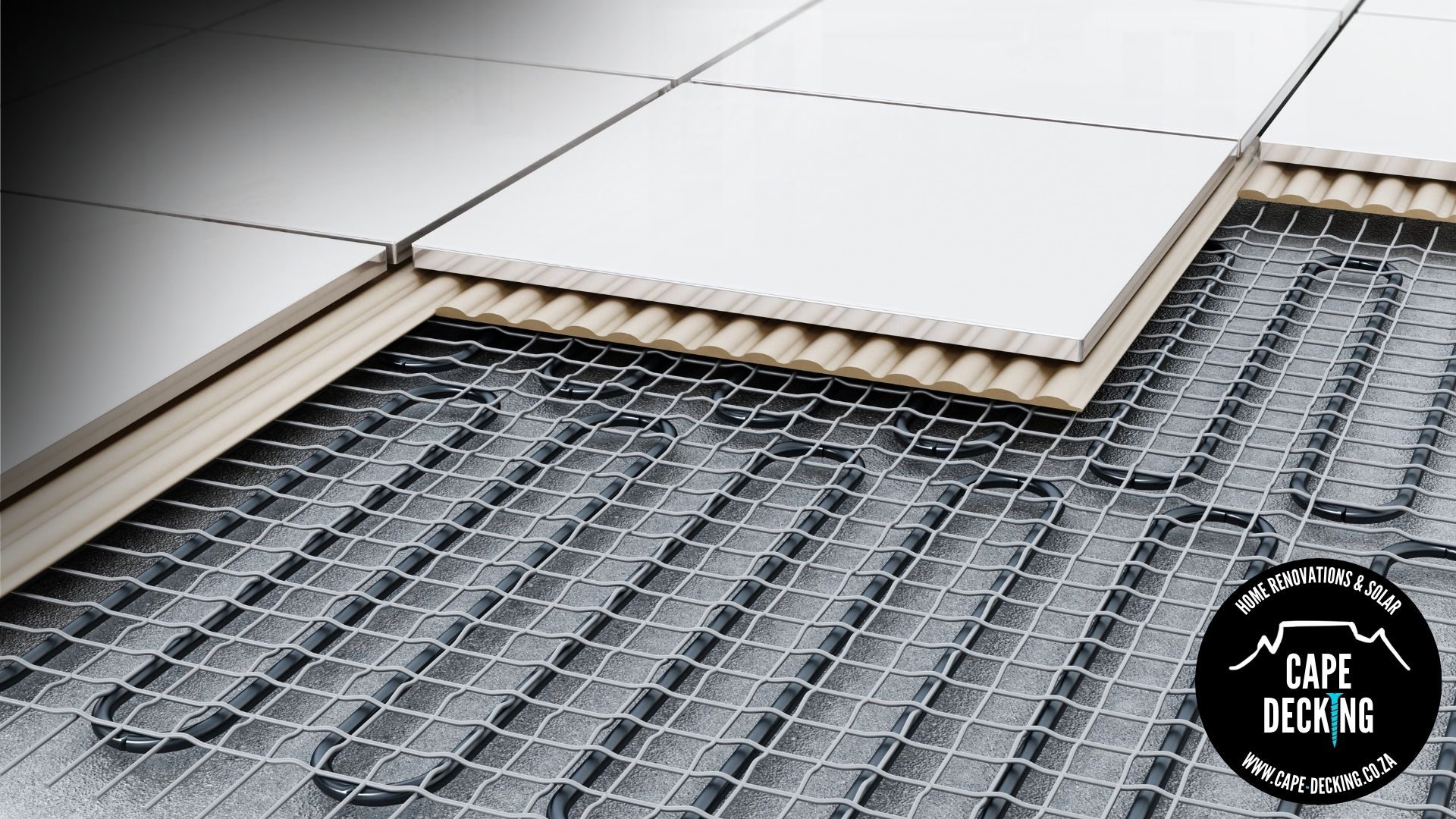
Hydronic underfloor heating uses warm water circulated through pipes under the floor surface to emit heat evenly and quietly. When combined with heat pumps (e.g. air‑to‑water models), the heat pump supplies hot water much more efficiently than electric resistance systems. Integration with solar + activated concrete can further reduce energy usage and allow for more stable temperature retention.

Key pain points companies face & solutions
- High energy costs in large spaces:
Use high‑COP heat pumps, optimize insulation and thermal mass (activated concrete), and integrate solar panels. - Uneven heating across large floor areas, cold spots:
Design piping layout carefully, use quality screed/concrete, and balance zones with manifold control. - Operating costs / maintenance burden:
Select durable components, low‑maintenance systems, and implement preventive maintenance schedules. - Initial capital expenditure:
Show ROI via energy savings, possible subsidies, and higher property value; plan staged installations to spread cost. - Regulatory or compliance requirements:
Use eco‑friendly refrigerants, integrate solar to reduce footprint, and comply with building efficiency standards.
Large‑scale hydronic underfloor heating system installation advantages
- Reduced cost per sqm when scaling piping, manifolds, heat pump sizing, and procurement.
- Energy efficiency gains through lower water temperatures and better thermal mass.
- Improved sustainability credentials with renewable energy integration.
- Increased property value and marketability for commercial developments, hotels, and estates.
How to plan a large‑scale hydronic underfloor heating system
- Load and heat demand calculation — insulation, glazing, climate, occupancy.
- Select appropriate heat pump capacity & type — support space heating and hot water.
- Floor construction & material choices — activated concrete or screed for thermal mass.
- Zoning & control systems — manifold zones, thermostats, durable controllers.
- Integration with renewable energy — solar panels, batteries, and hybrid setups.
- Long‑term maintenance planning — serviceable parts, warranties, and remote monitoring.
Why companies should act now
- Energy prices in South Africa are rising; efficient systems lower operating costs.
- Regulatory and social pressure for greener buildings is increasing.
- Mature technology means more affordable, reliable, and well‑supported systems.
- Early adopters benefit from reduced costs and marketing advantages.
If your company is evaluating large‑scale installations of heat pumps with hydronic underfloor heating systems, get in touch with specialists who can perform energy modelling, custom system design, and offer turnkey installation.
Frequently Asked Questions
A heat pump is an energy-efficient device that transfers heat from one place to another rather than generating heat directly. In South Africa, heat pumps are most commonly used to heat water or swimming pools. They extract warmth from the surrounding air and use it to heat water, using up to 70% less electricity than a conventional electric geyser or pool heater.
Think of it as your fridge working in reverse, instead of removing heat from inside, it pulls heat from outside and puts it to work.
Heat pump prices in South Africa vary based on size, brand, and application. As a general guide:
Domestic water heat pumps ≈ R8,000 to R18,000 installed
Pool heat pumps ≈ R15,000 to R35,000 installed
Commercial heat pumps ≈ R30,000 and above depending on scale
The upfront cost is offset by significant savings on your monthly electricity bill. Most homeowners see a return on investment within 2 to 4 years. Want an accurate quote? Get a free heat pump quote from Cape Decking today.
This is one of the most common questions homeowners ask, and the honest answer is: it depends on your situation.
Heat pumps work day and night, in cloudy conditions, and require no roof space or direct sunlight. Solar geysers rely on sunlight and are less effective in overcast conditions, though they can be cheaper upfront.
For consistent, reliable hot water with minimal electricity use, a heat pump is often the smarter long-term choice.
A standard heat pump requires electricity to operate and will not function during load shedding unless paired with a battery backup or solar PV system. However, because heat pumps are so energy efficient, they place far less demand on your backup power system than a conventional geyser would.
Pairing a heat pump with solar panels is an increasingly popular solution across South Africa.
A pool heat pump South Africa homeowners love is exactly what it sounds like, a system that heats your swimming pool efficiently throughout the year. South Africa’s climate makes pool heat pumps extremely effective, as even mild ambient air temperatures allow the system to work well.
- Extends your swimming season by months
- Uses up to 80% less electricity than a traditional pool heater
- Low maintenance with a long lifespan of 10 to 15 years
If you have a pool, a heat pump is one of the best upgrades you can make.
Yes, hydronic underfloor heating is seen as a premium feature that improves comfort, energy efficiency, and aesthetics by eliminating bulky radiators. Many buyers view it as a luxury upgrade, which can increase the desirability and value of a property.
Hydronic underfloor heating systems are highly durable, with pipework lasting 40–50 years or more if properly installed. The manifolds, pumps, and boilers/heat pumps may need replacement every 15–20 years, but the system overall is a long-term investment in comfort and efficiency.
Yes, hydronic underfloor heating can be retrofitted into existing homes, though it may involve lifting flooring and increasing floor height slightly. It is most cost-effective when installed during new builds or major renovations. In-screed and over-floor panel systems are available for retrofits.
Yes, hydronic underfloor heating is generally more cost-effective to run compared to electric systems, especially for larger areas. It uses heated water circulated through pipes and can be powered by energy-efficient heat pumps or solar systems, reducing long-term energy expenses.
Hydronic underfloor heating is a heating system that uses warm water circulated through pipes installed beneath the floor surface. The heated water gently warms the floor, which then radiates heat evenly throughout the room. This system is energy-efficient, provides consistent comfort, and can be powered by a variety of heat sources such as gas boilers, heat pumps, or solar systems. It is especially popular in South Africa for homeowners seeking a modern, cost-effective, and long-lasting home heating solution.
On average, electric underfloor heating costs between R400 and R1,200 per month depending on the size of the space and how frequently it is used.
Contact us to schedule in an appointment, we can also install a solar system to make it more cost effective to run underfloor heating.
The cost per m² for electric underfloor heating is between R1,000 and R2,500, while water underfloor heating costs between R2,000 and R3,800 per m². It is subject to your current flooring type, square meterage per room.
Contact us to schedule in an appointment.
Electric underfloor heating is cheaper to install (R1,000 – R2,500 per m²) and best for small rooms, but running costs are higher (R400 – R1,200/month).
Water underfloor heating systems cost more upfront (R2,000 – R3,800 per m²) but are cheaper to run (R300 – R800/month), making them ideal for larger homes.
Contact us to schedule in an appointment to find out what the options are between electric vs water underfloor heating systems. We can also install a solar system to make it more cost effective to run underfloor heating.
Electric underfloor heating does increase electricity usage, but thanks to its efficiency, it is often more affordable than using heaters or air conditioning. Water-based systems are even more cost-effective long-term.
Contact us to schedule in an appointment, we can also install a solar system to make it more cost effective to run underfloor heating.
The installation time for underfloor heating depends on the room size and system type. A small room may take 1–2 days, while a whole house installation can take 1–2 weeks.
Contact us to schedule in an appointment and learn how to make the underfloor heating installation more cost effective with the installation of a solar system.
Yes, underfloor heating works very well under tiles. Tiles are excellent heat conductors, making them one of the most efficient flooring types for electric and water underfloor heating systems.
Contact us to find out how to make your underfloor heating installation more cost effective with a solar system.
Yes, underfloor heating can be used under laminate or wood flooring, but the system must be installed correctly with proper insulation to prevent overheating and to ensure energy efficiency.
Contact us to find out how to make your under wooden flooring underfloor heating installation more cost effective with a solar system.
Yes, underfloor heating is considered a luxury feature in South Africa. It not only improves comfort and energy efficiency but also increases the resale value of your property.
Contact us to find out how to make your underfloor heating installation more cost effective with a solar system.
When installed professionally, underfloor heating systems can last for more than 25 years. Electric heating mats and water pipes are highly durable and require minimal maintenance.
Contact us to find out how to make your underfloor heating installation more cost effective with a solar system.
Electric underfloor heating is cheaper to install and is ideal for small rooms such as bathrooms or kitchens. Water underfloor heating is more expensive upfront but is better for larger areas and whole-house heating due to lower running costs.
No, underfloor heating is generally cost-effective to run compared to heaters and air conditioners. Electric underfloor heating typically costs between R400 – R1,200 per month, while water systems are even cheaper in the long term due to better efficiency.
The cost of underfloor heating in South Africa ranges from R1,000 – R2,500 per m² for electric systems and R2,000 – R3,800 per m² for water systems. Installation costs for an average room can range from R25,000 to R70,000+ depending on the system type and floor size.




Share This Story, Choose Your Platform!
Related Posts

In this Article
- Hydronic Underfloor Heating & Heat Pump Solutions for Large-Scale Commercial Projects in South Africa
- What is hydronic underfloor heating + heat pump integration
- Key pain points companies face & solutions
- Large‑scale hydronic underfloor heating system installation advantages
- How to plan a large‑scale hydronic underfloor heating system
- Why companies should act now
- Frequently Asked Questions
- What is a heat pump and how does it work?
- How much does a heat pump cost in South Africa?
- Is a heat pump better than a solar geyser in South Africa?
- Can a heat pump work during load shedding?
- What is a pool heat pump and is it worth it?
- Does hydronic underfloor heating add value to a property in South Africa?
- How long does hydronic underfloor heating last?
- Can hydronic underfloor heating be installed in existing homes?
- Is hydronic underfloor heating cheaper to run than electric underfloor heating?
- What Is Hydronic Underfloor Heating
- How much does electric underfloor heating cost to run monthly?
- What is the cost per m² for underfloor heating in South Africa?
- What is the difference between electric vs water underfloor heating?
- Does underfloor heating increase electricity bills in South Africa?
- How long does an underfloor heating installation take?
- Can underfloor heating be installed under tiles?
- Can underfloor heating be used under laminate or wood?
- Does underfloor heating add value to my home?
- How long does underfloor heating last?
- Which is better – electric or water underfloor heating?
- Is underfloor heating expensive to run?
- How much does underfloor heating cost in South Africa?
RECENT BLOG POSTS
SEARCH THE SITE
TAGS