

Underfloor Heating Cape Town: What You Need to Know Before You Install
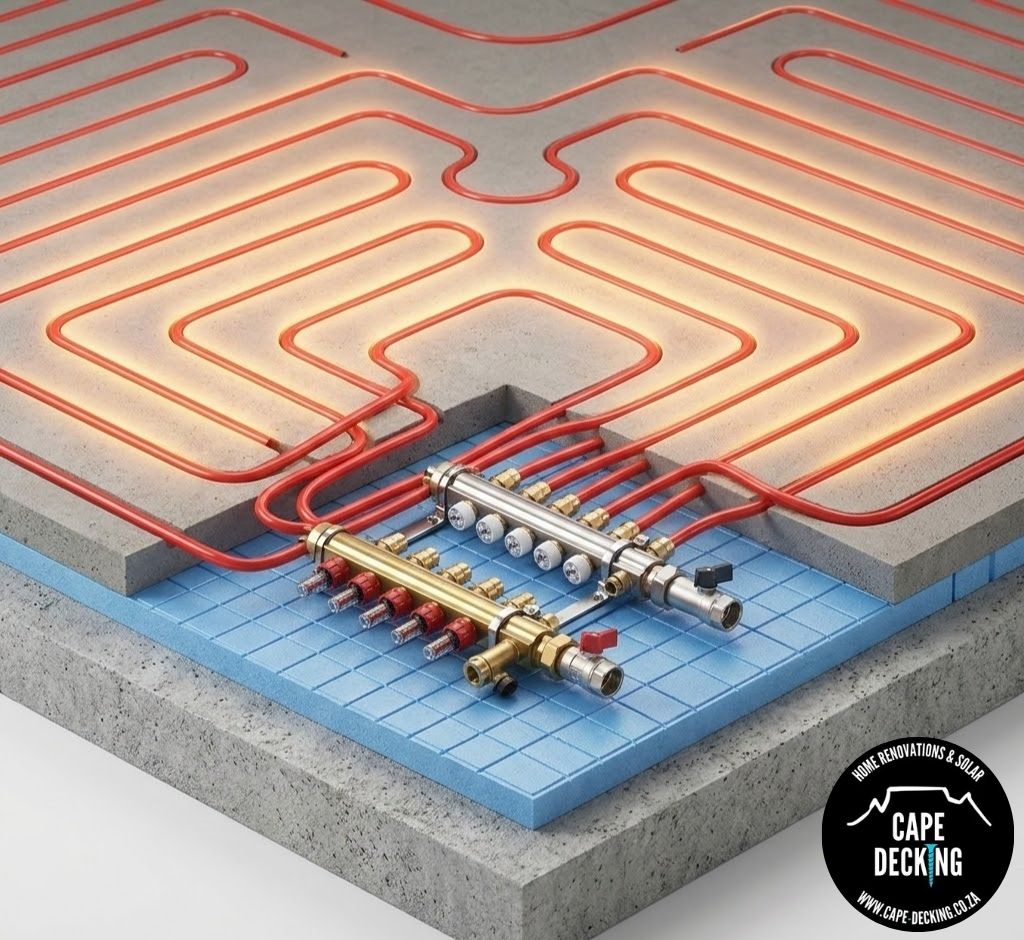
Underfloor Heating in Cape Town Explained
If you have been considering underfloor heating for your home or development, you are not alone. More Cape Town homeowners, architects, and property developers are choosing underfloor heating in Cape Town as a smart, modern alternative to traditional heating systems. It is discreet, energy-efficient, and delivers consistent warmth across every room.
Whether you are building new or renovating, understanding your options and underfloor heating price is the first step to making the right decision. At Cape Decking, we help clients across the Western Cape choose and install the right system for their space and budget.
What Are the Different Types of Underfloor Heating Systems?
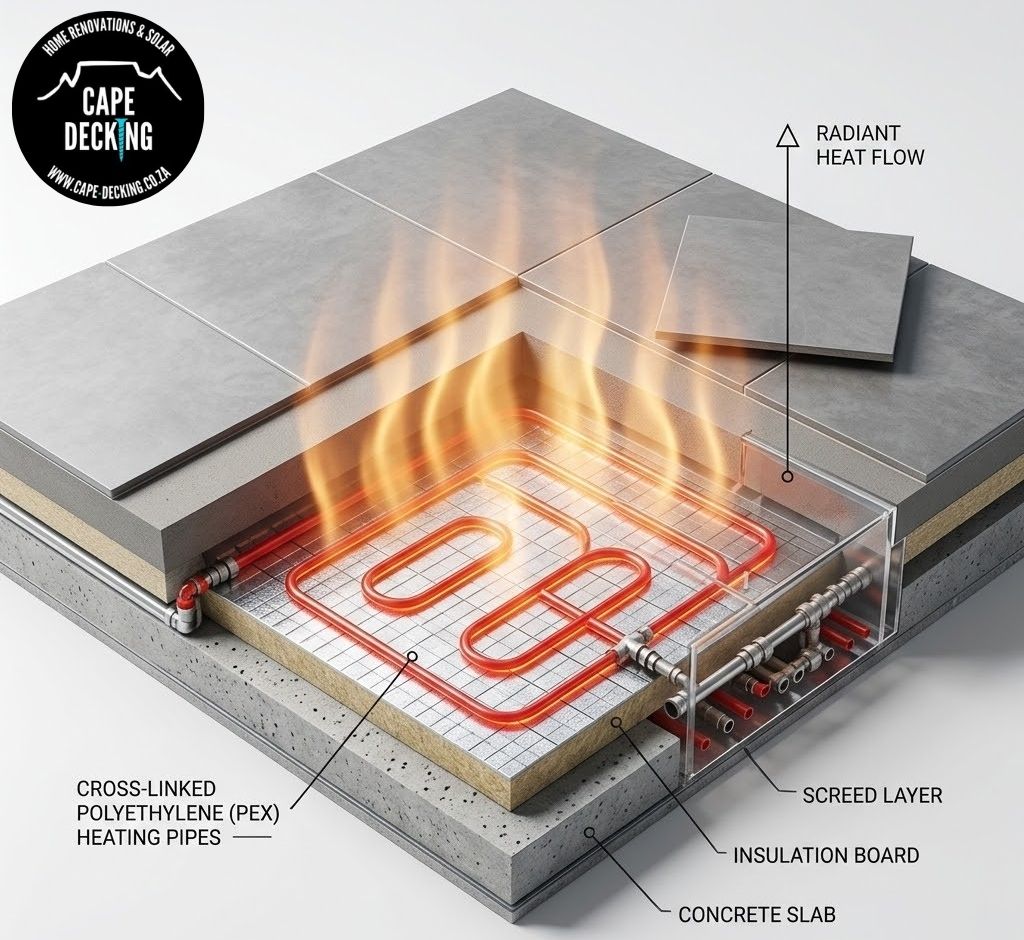
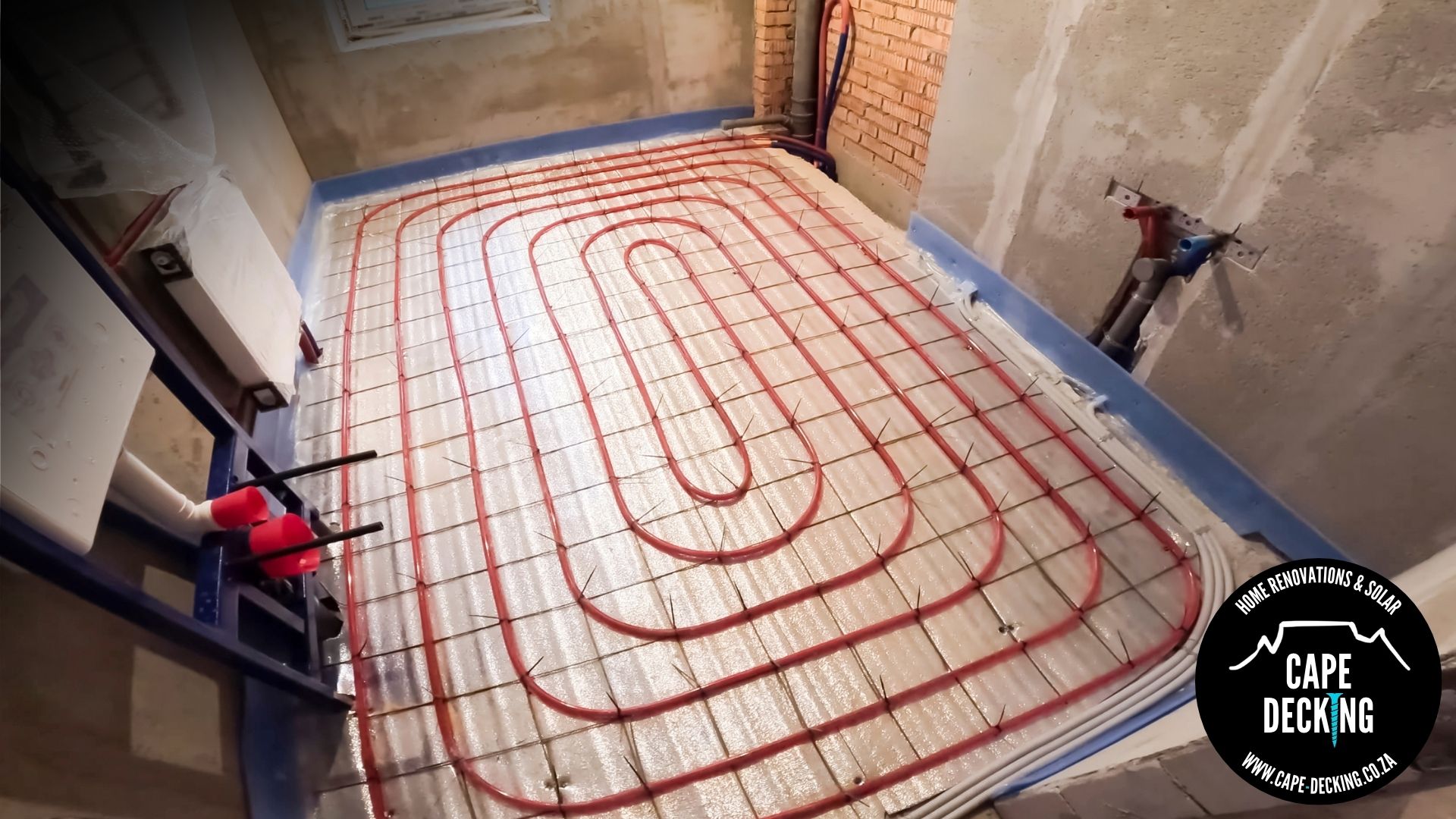
There are two primary types of underfloor heating systems available in South Africa: electric (dry) and hydronic (wet). Electric underfloor heating uses heating cables or mats installed beneath your floor surface. This typically makes it easier and more affordable to install, making it a popular choice for smaller areas like bathrooms and kitchens. Hydronic systems circulate warm water through pipes beneath the floor and are better suited to larger spaces or whole-home installations. This will offer lower running costs over time.
The right system depends on your floor type, the size of the space, and your long-term energy goals. According to Wikipedia’s overview of underfloor heating, radiant floor systems have been used effectively across a wide range of climates and building types. A professional assessment is always the best starting point.
How Much Does Underfloor Heating Cost in South Africa?
Underfloor heating price in South Africa varies depending on the system type, the size of the area, and the complexity of the installation. As a general guide, electric underfloor heating typically ranges from R200 to R600 per square metre for supply and installation. Hydronic systems can range from R800 to R1,500 or more per square metre due to the additional pipework and components involved.
These are indicative figures and your actual underfloor heating cost will depend on your specific project. The good news is that it adds measurable value to a property/ This makes it a worthwhile long-term investment for homeowners and developers alike. You can also explore South Africa’s energy efficiency guidelines via the Department of Mineral Resources and Energy for further context on efficient heating choices.
How Long Does Underfloor Heating Installation Take?
Installation time for underfloor heating depends on the system type and the scope of the project. Electric mat or cable systems in a single room can typically be installed within a day. Larger multi-room or hydronic installations may take several days and require coordination with your screed, tiling, or flooring contractor.
For new builds, underfloor heating is best planned and installed at the screed or subfloor stage to avoid costly retrofitting later. Cape Decking works with homeowners, architects, and contractors across Cape Town to ensure installations are planned and executed efficiently.
Is Underfloor Heating Suitable for Cape Town’s Climate?
Absolutely. While Cape Town is known for its mild summers, the winters can be consistently cold and damp. Underfloor heating in Cape Town is an ideal solution because it heats spaces evenly and efficiently without the visual clutter
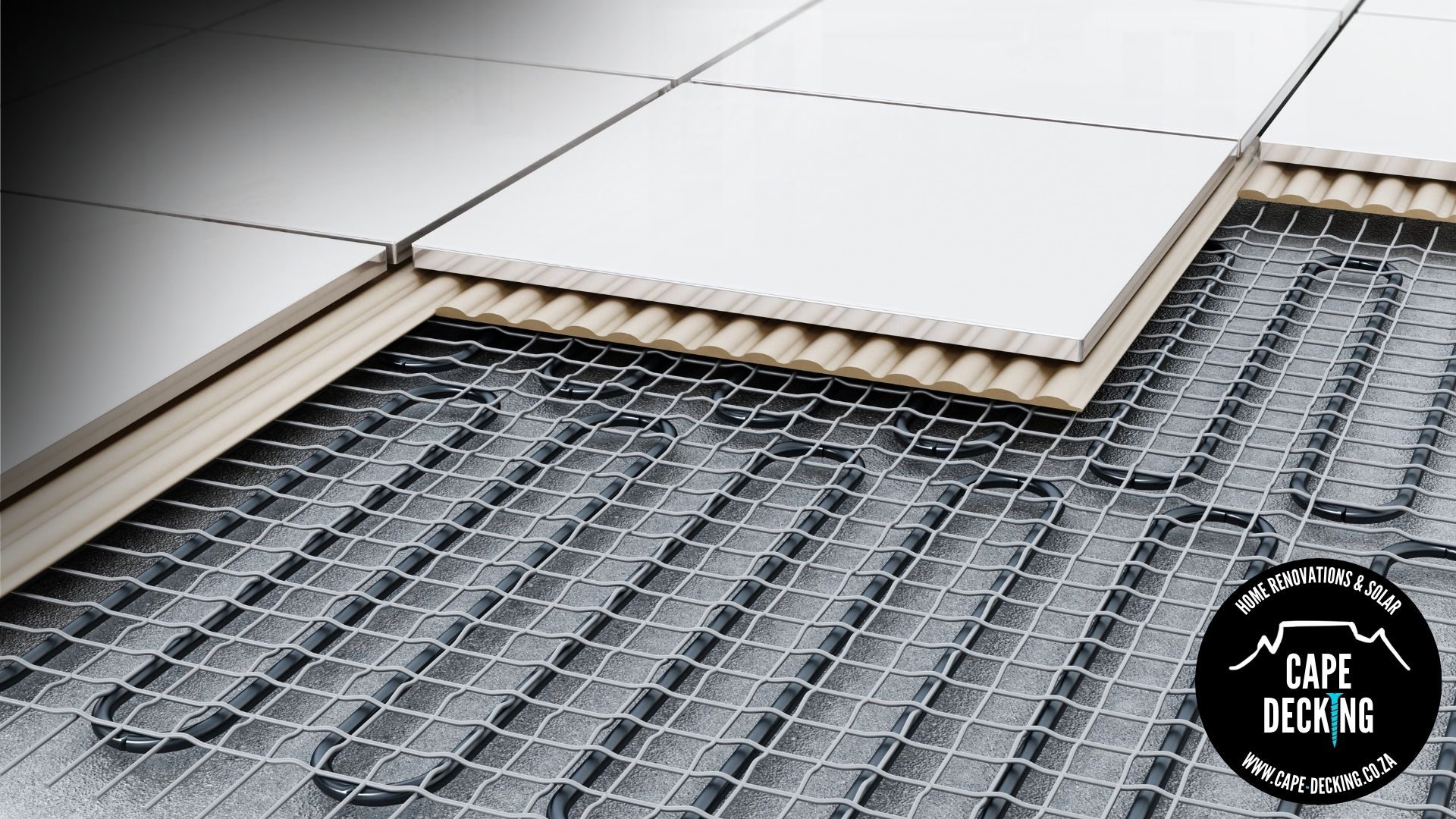
It works particularly well beneath tiled floors, but is also compatible with engineered timber, vinyl, and stone. For new builds and renovations across the Western Cape, it is becoming a standard specification rather than a luxury add-on.
What Floors Are Compatible With Underfloor Heating?
A common question homeowners and contractors ask is whether their existing or planned floor covering is compatible with underfloor heating. The answer is that most modern floor coverings are. Tiles and stone are the most efficient conductors of heat and work exceptionally well. Engineered timber and luxury vinyl are also compatible when installed correctly. Solid hardwood and thick carpet can reduce efficiency and may not be recommended depending on the system.
Your installer should always assess thermal resistance before specifying a system. Cape Decking can advise on compatibility as part of the quoting process. For a deeper understanding of how radiant heat interacts with different floor surfaces, this overview from Wikipedia on radiant heating is a useful reference.
Share This Story, Choose Your Platform!
Related Posts


In this Article
RECENT BLOG POSTS
SEARCH THE SITE
TAGS